
The Unseen Machinery: Inside the RSL Department of Storage of Main Collections
To mark the centenary of the RSL Department of Storage of Main Collections, we have prepared a series of stories about its history, its people, and its secrets. Today, we will look at how the Department’s three sectors keep the Main Collection alive.
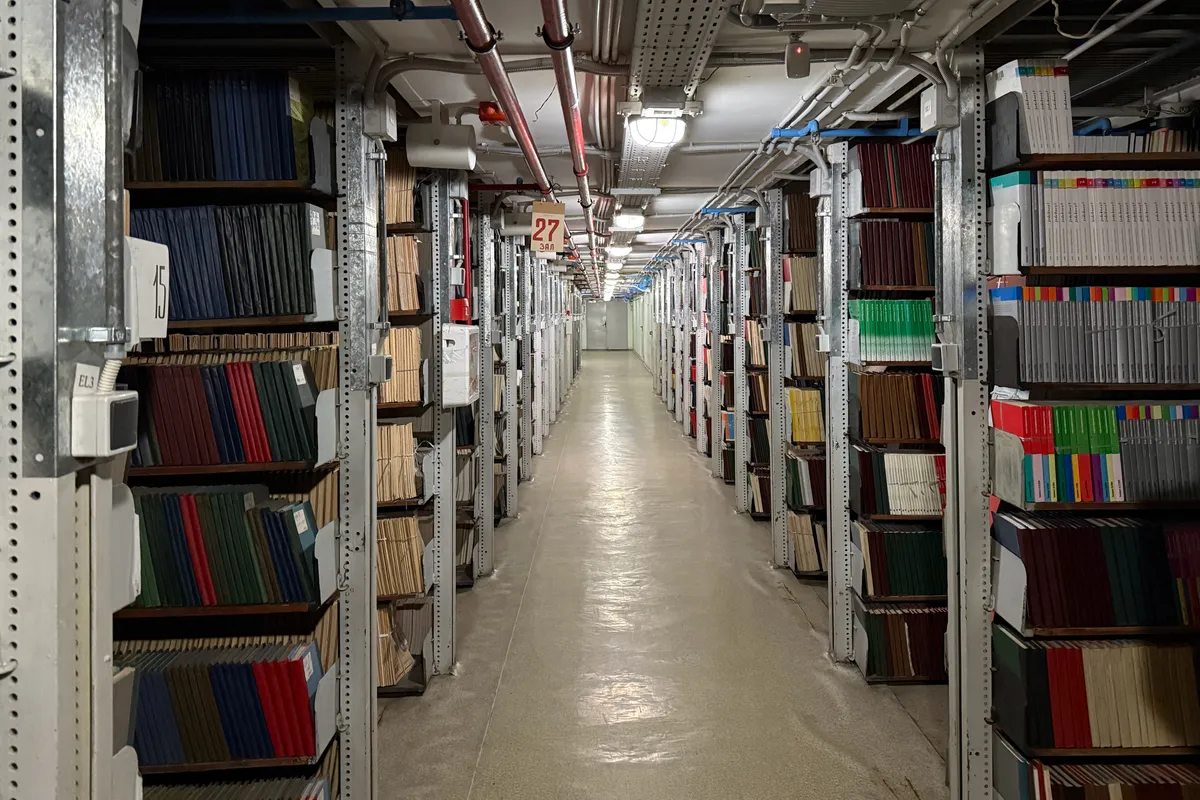
Photo: Maria Govtvan, RSL
In our previous article we traced the journey of a book from order to reader. But how does a book enter the collection? Who decides where it should go? How do we keep it from crumbling with age, and how do we discover who owned it along the way?
Behind the movement of books in the Main Collection are three sectors—each with its own tasks, its own rhythm of work, and its own staff. What unites them is this: without each sector, the collection would cease to function as a single organism.
That is what today’s story is about.
Research and Methodology Sector
The Research and Methodology Sector of the RSL Department of Storage of Main Collections is concerned with studying books, reconstructing their history and making them accessible to researchers and readers. Here, work with book monuments, provenance catalogues, public lectures and conferences are all interwoven into a single whole.
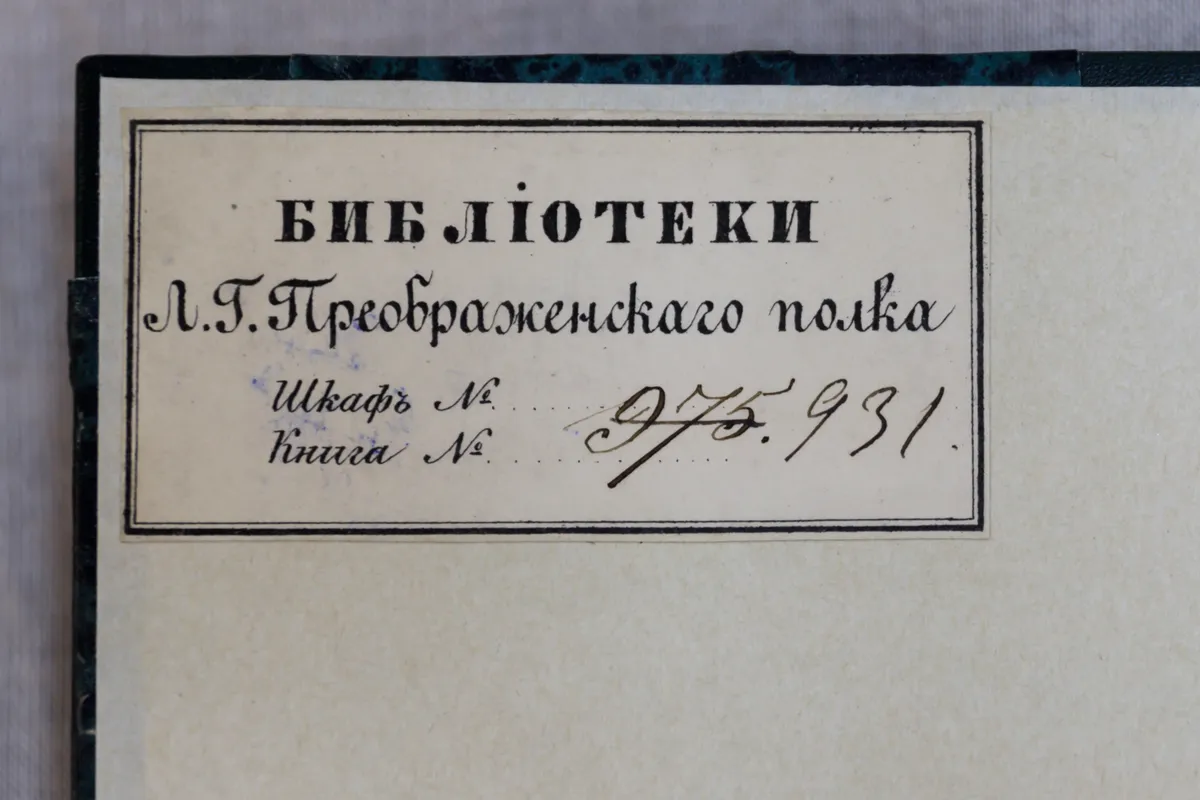
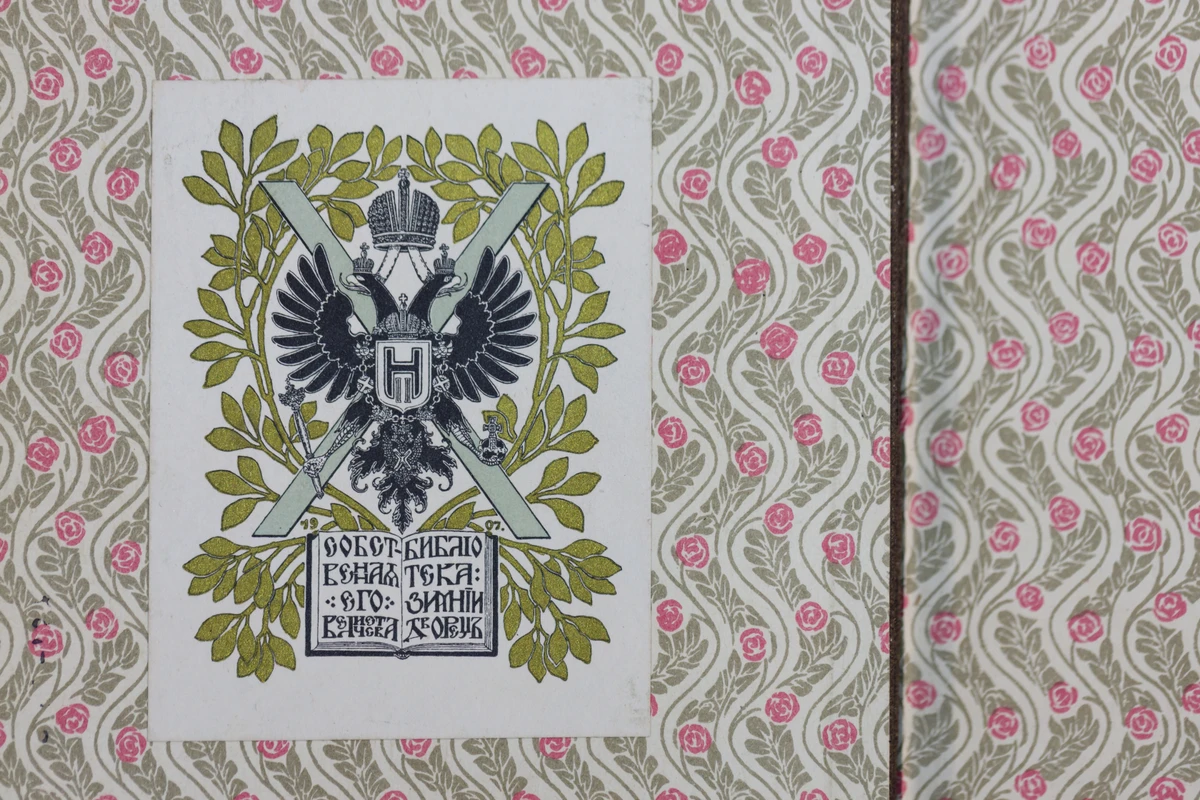
Photo: Ex libris of the Library of the Life Guards Preobrazhensky Regiment on Pavel Yershov's book “The Little Humpbacked Horse” (1865)
Available for ordering to the RSL Reading Room
Photo: Maria Govtvan, RSL
Book Monuments
To the ordinary reader, the term “book monument” is one of the most mysterious concepts. What does this status mean, how does a book acquire it, and what effect does it have?
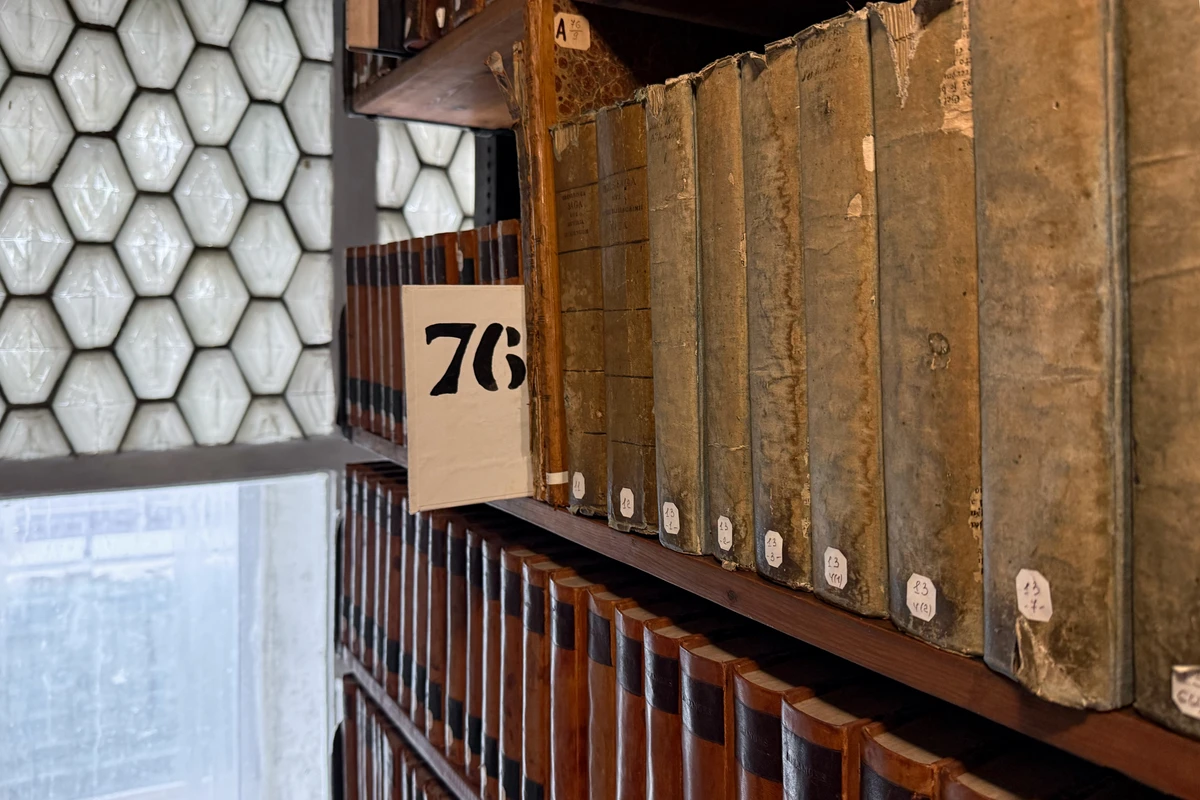
The first reference point for a specialist is the title page and year of publication. Everything published before 1830 automatically becomes a book monument on chronological grounds. And if a book was published before 1600, it is not only a book monument but is referred to as an early printed book.
The second criterion is whether a book belongs to socially significant publications or to important collections. This includes books from the personal libraries of the Romanovs, which are mostly kept on levels 15–19. Staff look at the spines and recognise the typical leather bindings, supralibros on the covers, and ex libris inside. Just recently, several books from Alexandra Feodorovna the Younger’s library were discovered—purely from the inscriptions, autographs, and dedications. Each new find adds to the Register of Book Monuments.

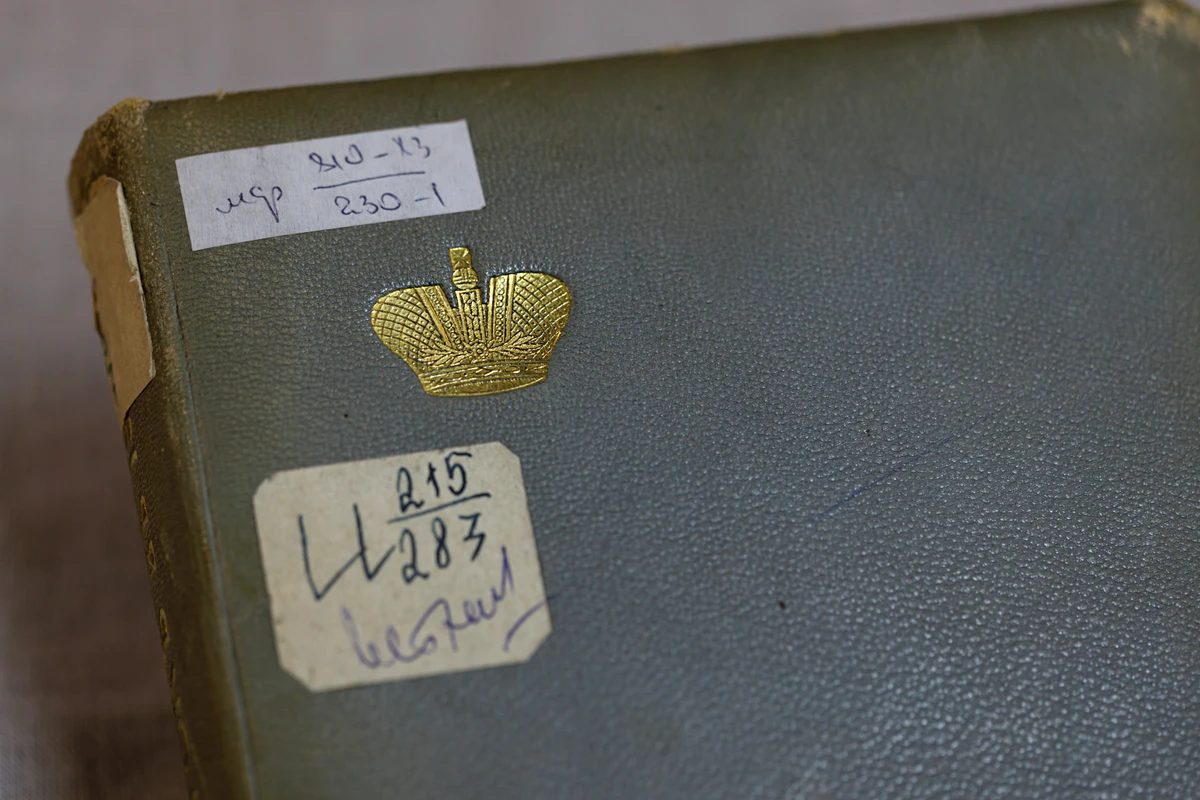

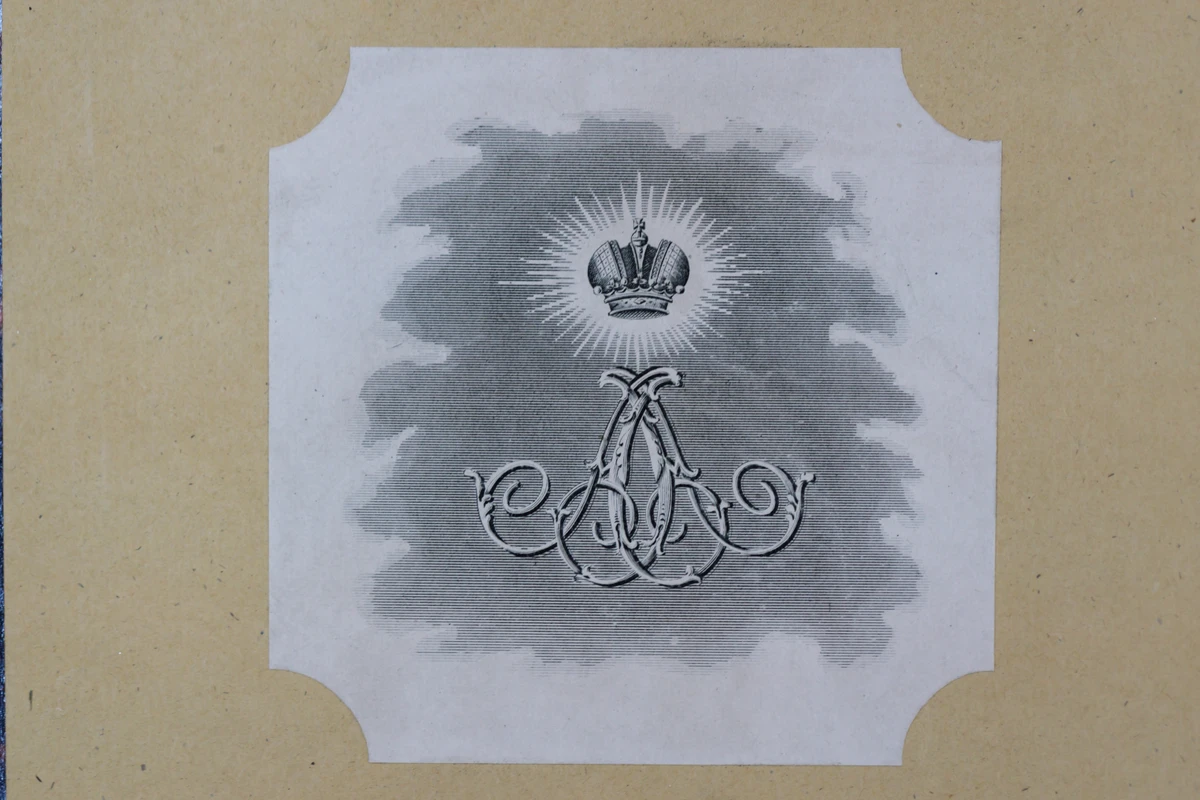

Once a book has been identified, it is logged, and then a bibliologist takes over, compiling a painstakingly detailed description. “We note everything: every mark, every annotation, every sign of damage, every detail of the binding. Even if the binding is flawless, we record that too,” says curator Olga Boldyreva. Some inscriptions become puzzles that take years to solve—deciphering the handwriting, identifying the giver and the recipient, and piecing together the story behind the presentation.
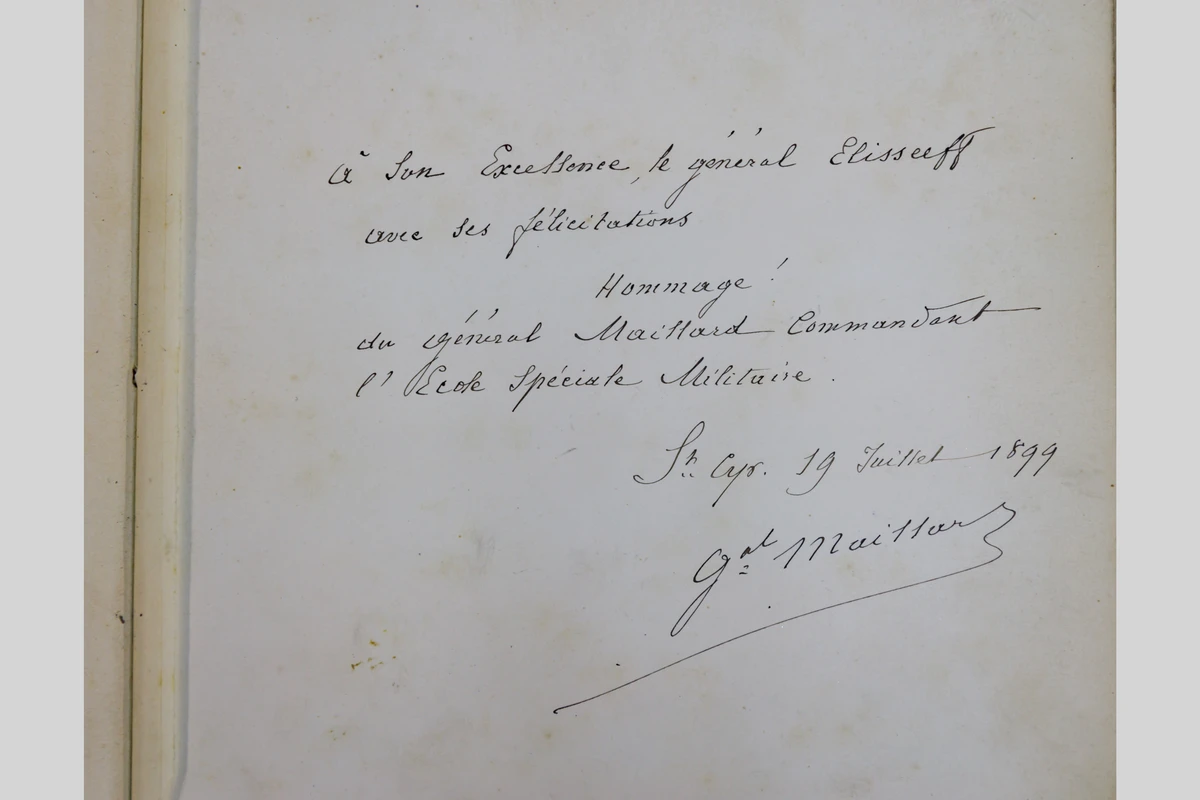
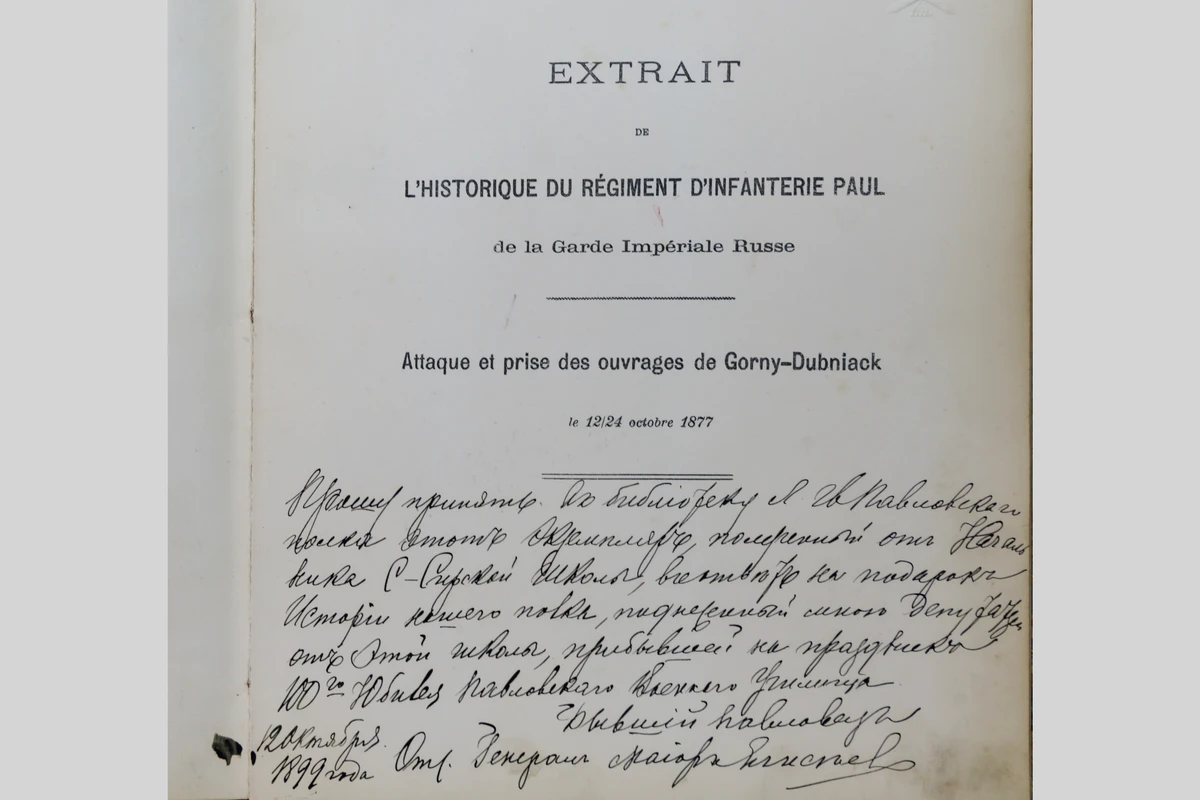
Take, for example, a book from the library of military history collector Aleksandr Makarov. This French publication tells the story of the Life Guards Pavlovsky Regiment—one of the oldest and most revered regiments in the Russian Imperial Guard. It all started when a monograph in Russian was sent to France. The French were so taken with it that they produced a short translated version for their cadets, then sent that translation back to Russia as a gift. And so the book travelled—from Russia to France and back again. Its pages still bear inscriptions by General Mayer and Major General Eliseev. During the cataloguing of this book monument, the full history of this particular copy was reconstructed—tracing its movement across borders, its succession of owners, and its eventual arrival at the RSL.
Annually, the Department of Storage registers 400–500 book monuments (across the entire library—about 4,000). If a book monument has been digitised, readers are offered the electronic copy, while the original remains on the shelf, preserved for future generations of researchers.
Provenance Marks
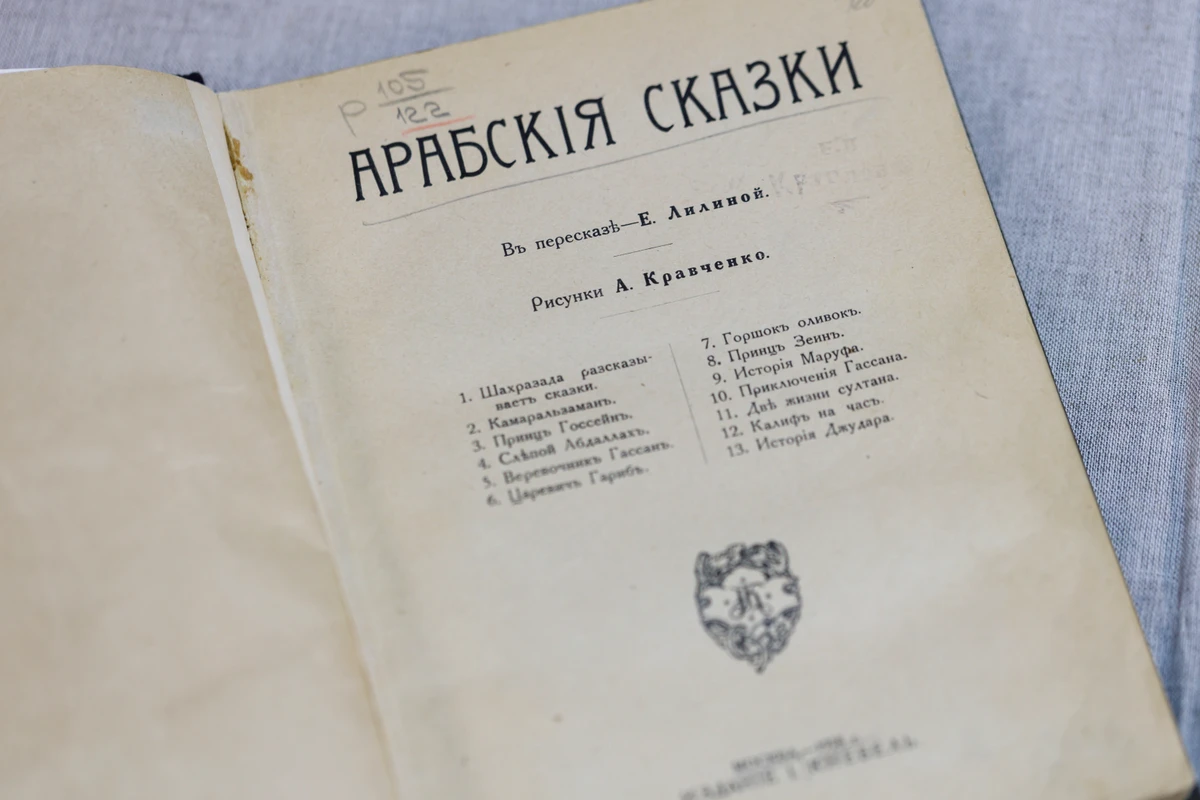
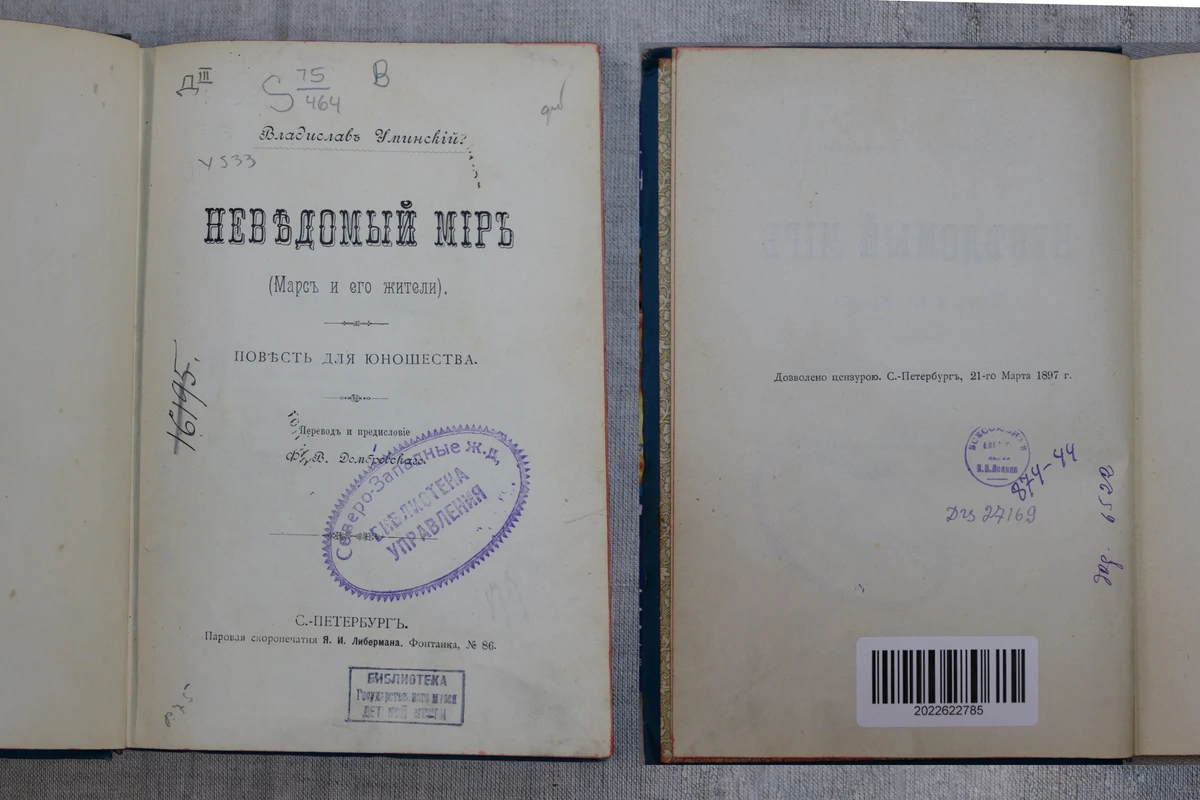
The work of identifying book monuments goes hand in hand with another crucial task: tracing provenance marks—stamps, autographs, ex libris, and dedications. “For us, any autograph is important,” says curator Yulia Vishnyakova. “We never dismiss anything as trivial. It makes no difference whether the owner is known to us today or not. They may be unknown now, but in fifty years’ time, that name could prove to be of real significance”.
Whenever an author presented a book to a friend, two separate provenance marks are recorded: one for the giver, one for the recipient. That alone creates a verifiable history of the book’s transition from one owner to the next.
Attribution can take anywhere from a few minutes, if the mark is well known, to weeks or even years, if the handwriting is complex and the owner is not obvious. And then, after months of painstaking research, the pieces suddenly fall into place: this copy was a gift from Grand Duke Nikolai Konstantinovich to his cousin Alexander III… “Pure elation!” say the curators. That is what happened with a collection of railway articles bearing only the inscription “To dear Sashka from Nikola”. The clue was on the spine.
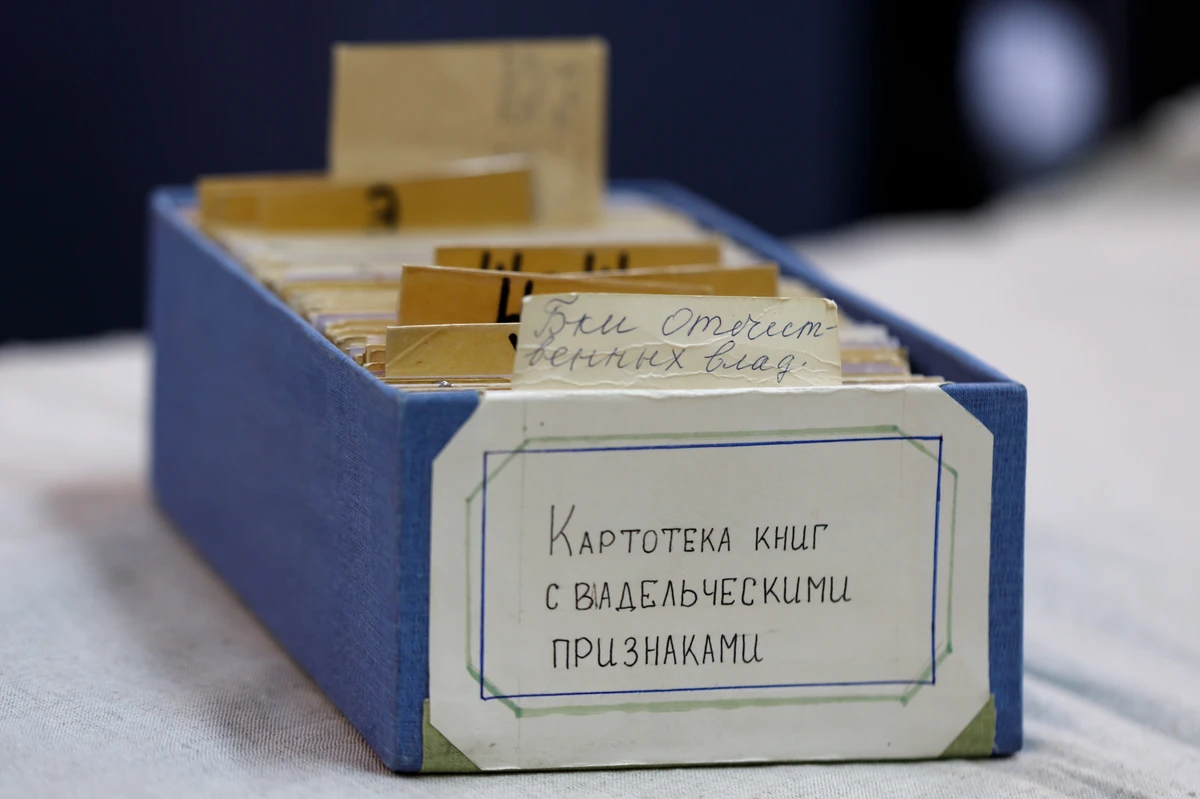
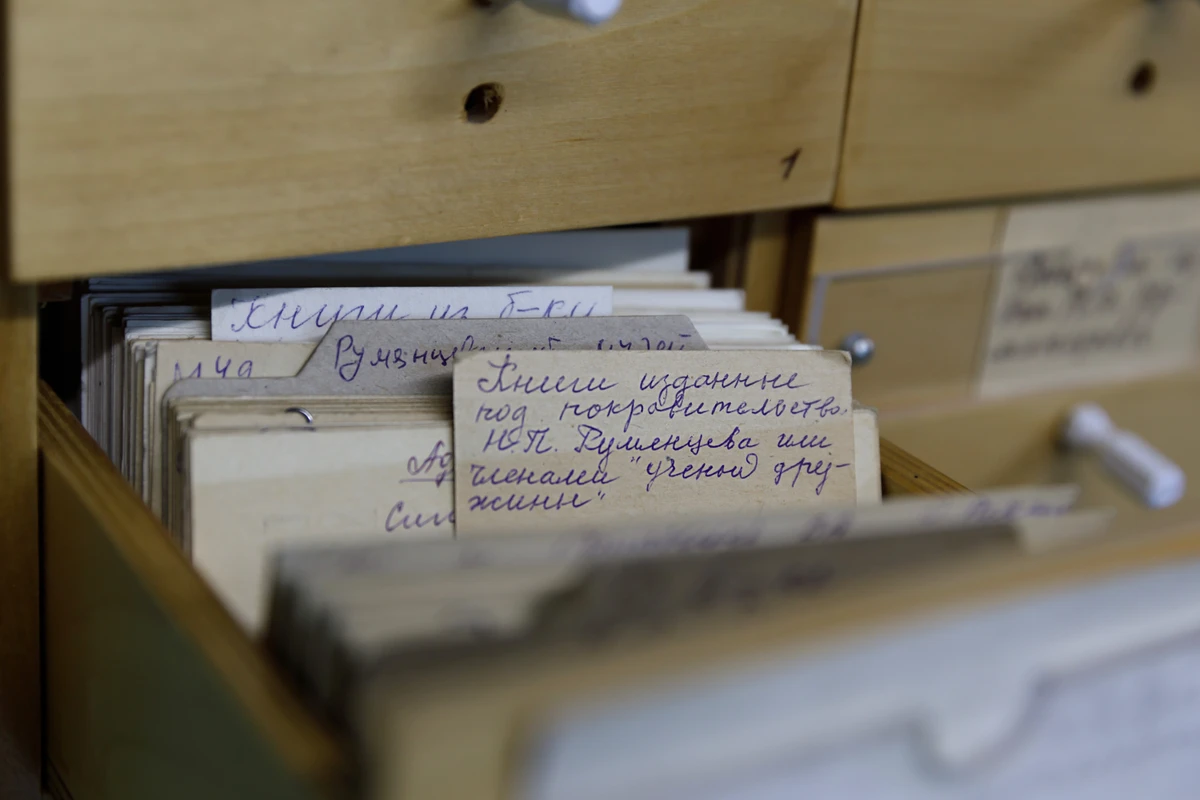
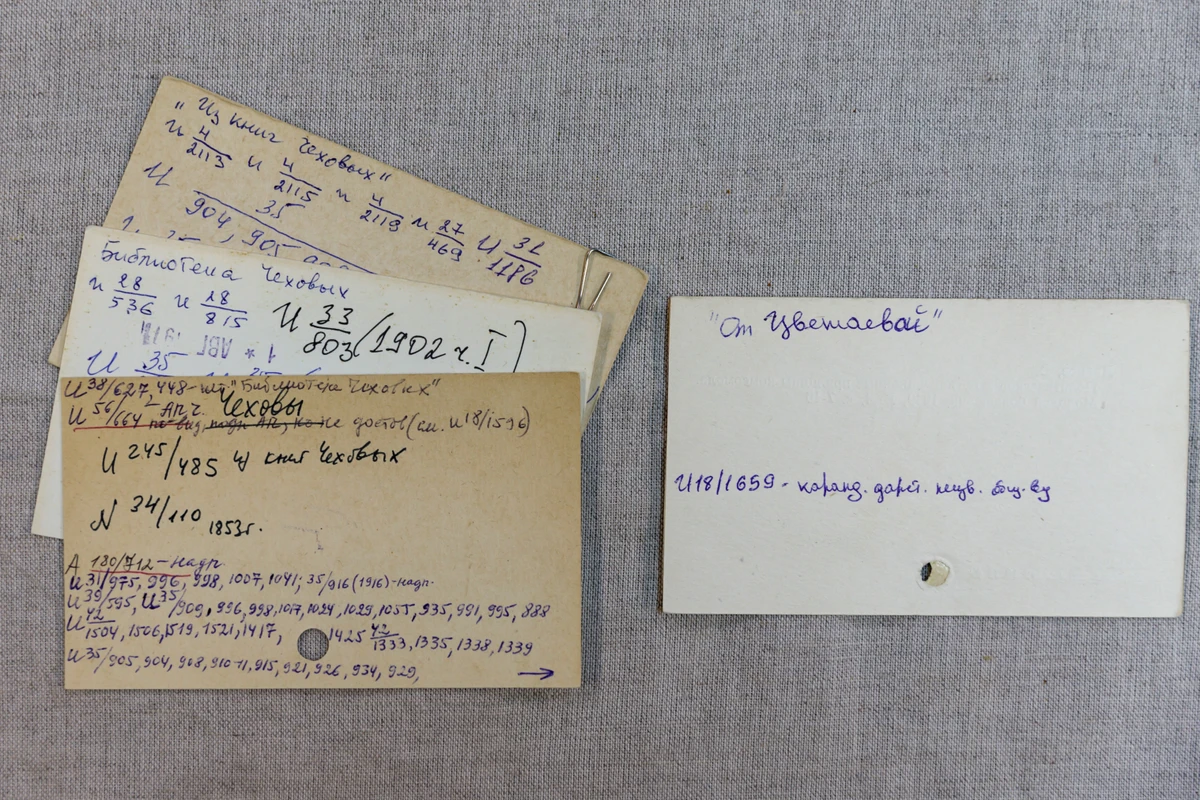
The sector’s card indices hold dozens of such stories.
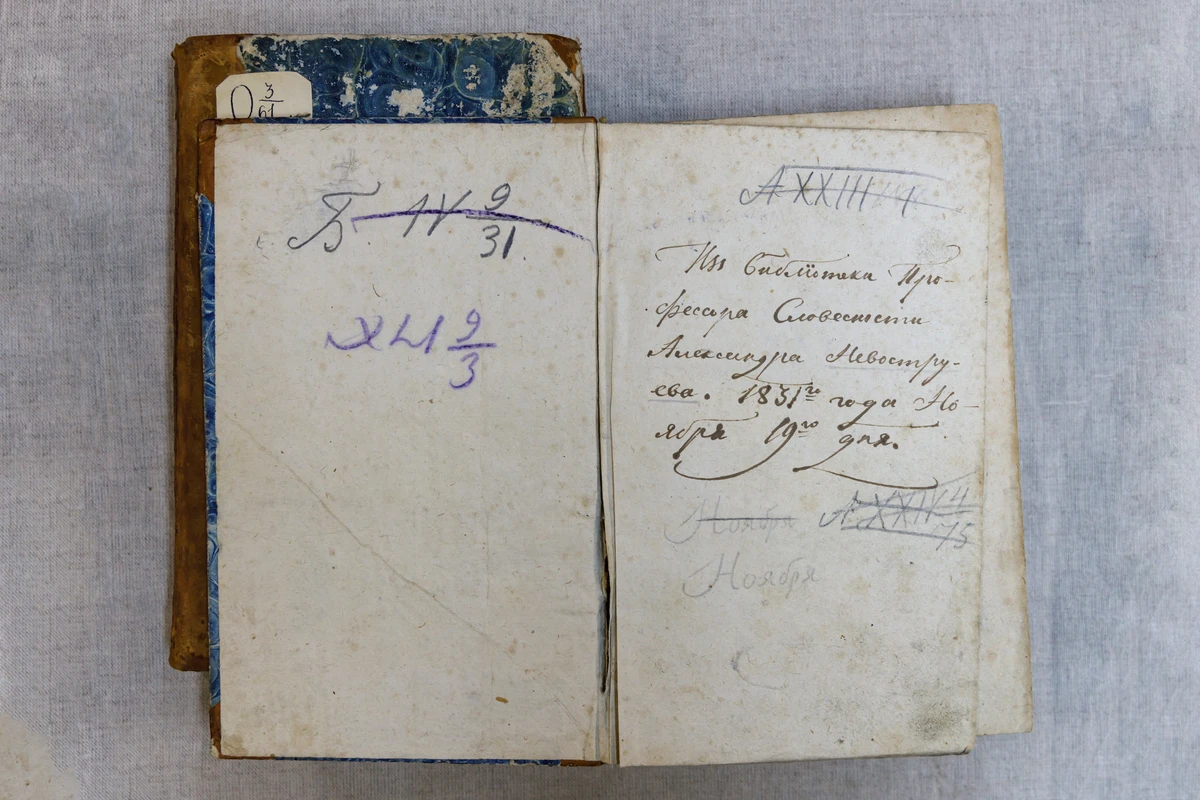
A book from the library of Professor of Literature Aleksandr Nevostruev with a provenance inscription. Handwriting from the first quarter of the 19th century.
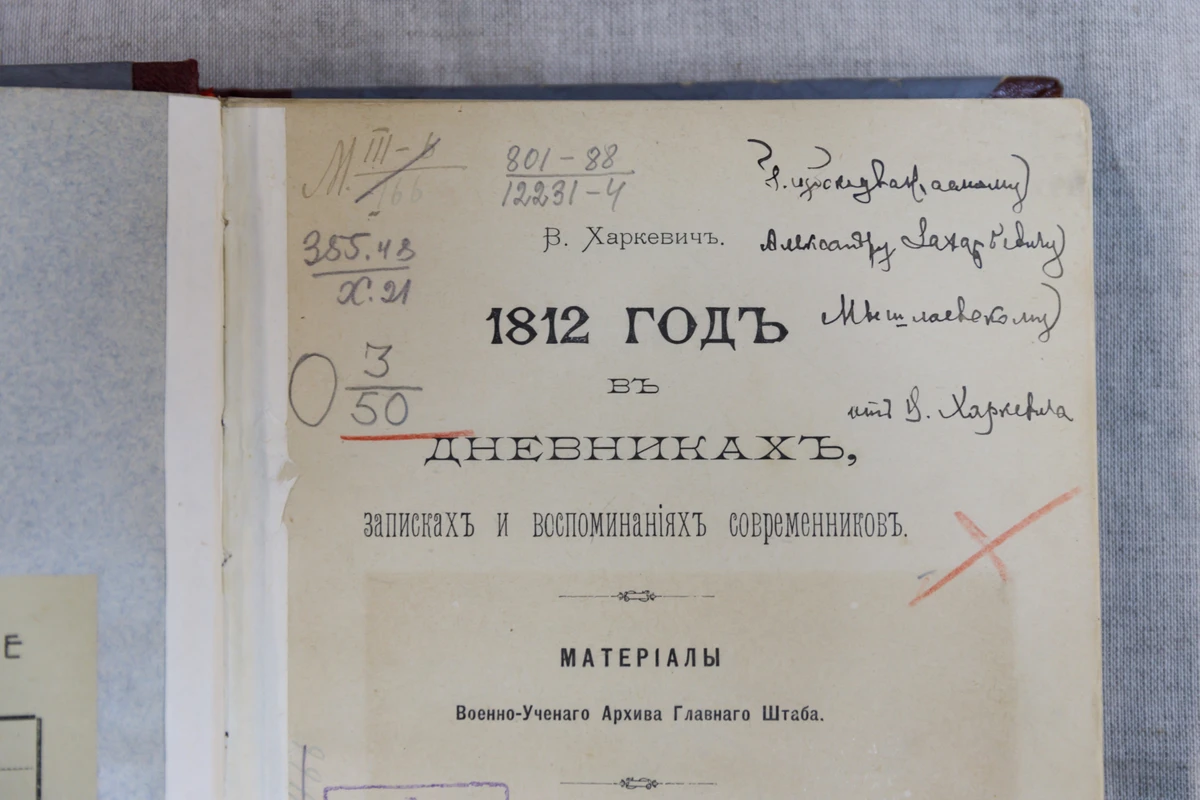
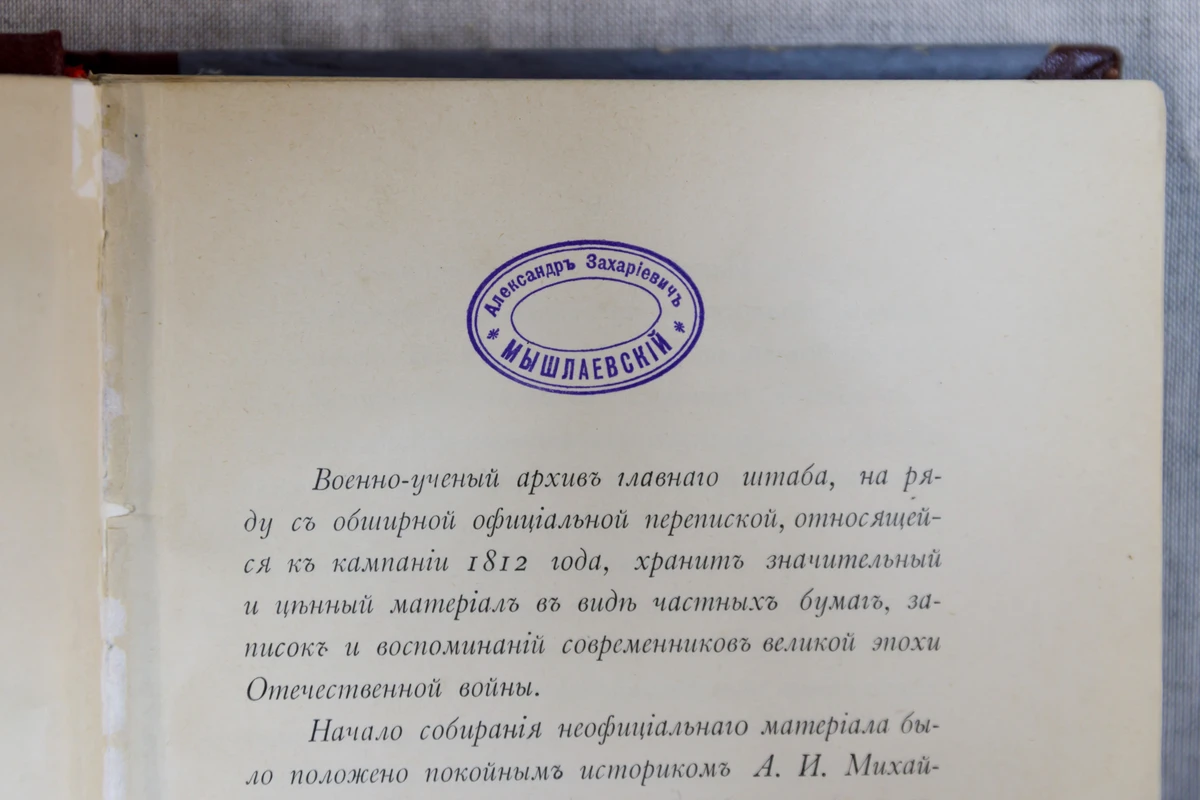
A book about 1812 with a presentation inscription from Lieutenant General Kharkevich to General Myshlayevsky. The latter placed the stamp of his personal library on the book; after his death, the book entered the library of the Zhukovsky Air Fleet Academy, and from there passed to the Lenin Library. Four owners—four traces.
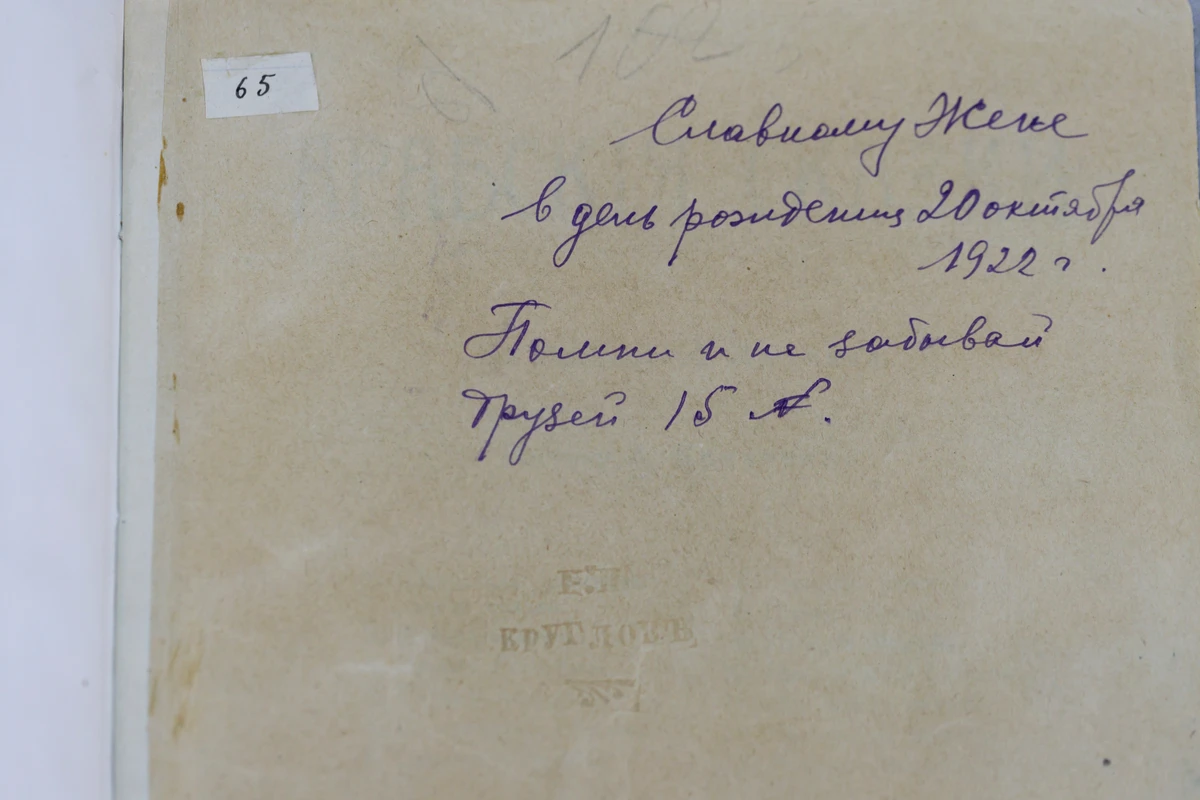
An inscription: “To the glorious Zhena on his birthday, 20 October 1922. Remember and do not forget your friends”. Scarcely visible beneath it is the stamp “E. L. Kruglov”. Who this Kruglov was remains a mystery—at least for now. But the fact that he commissioned a personal stamp suggests that his library was no small affair.
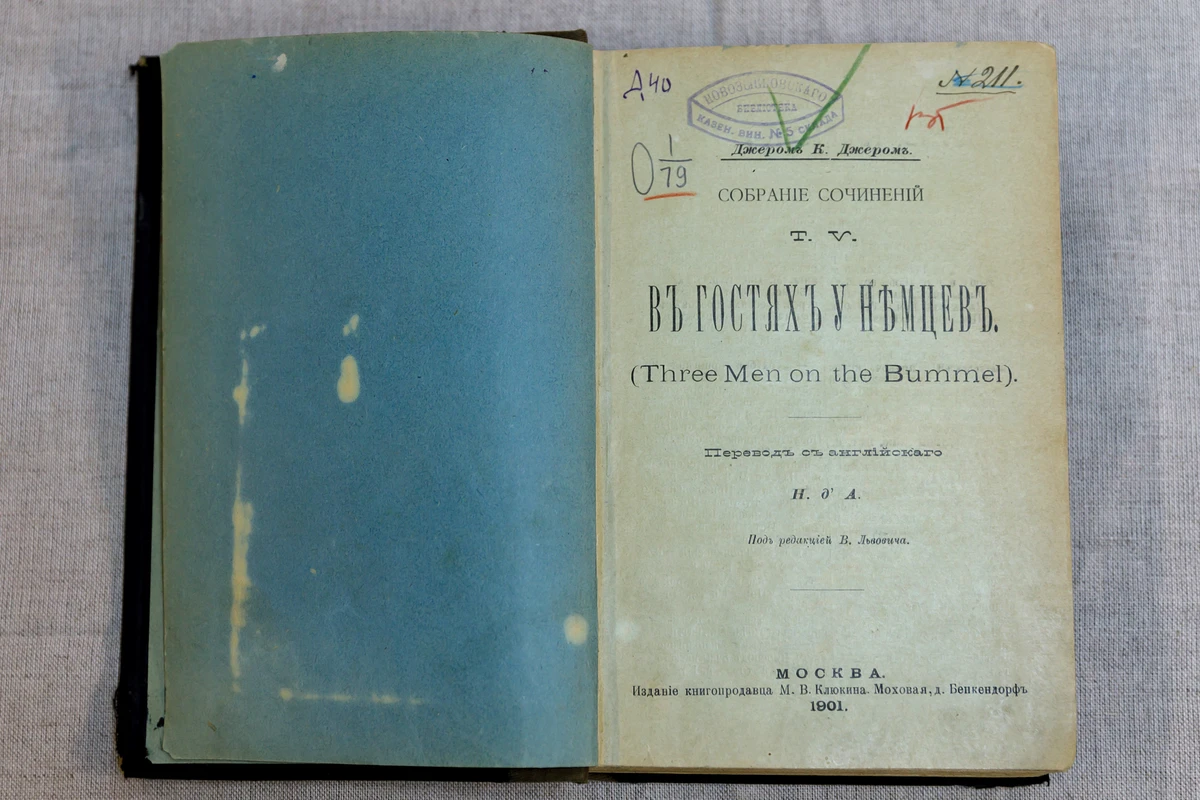
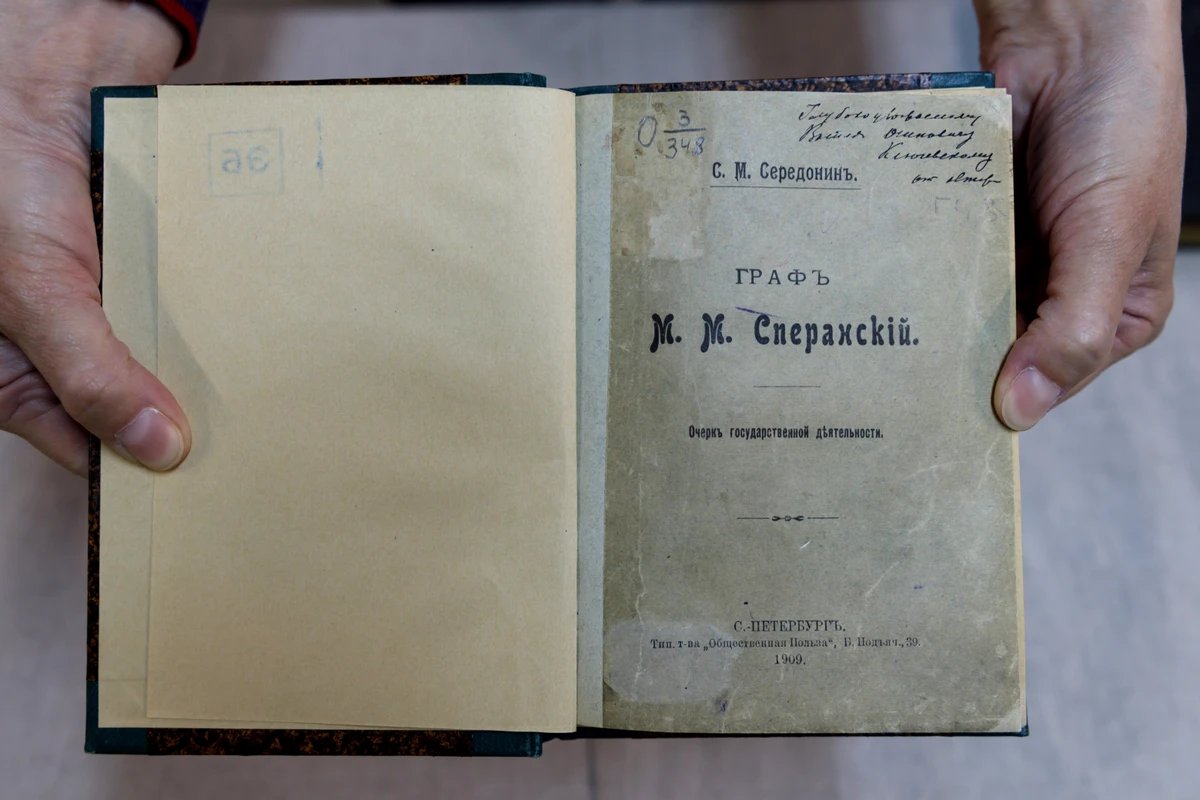
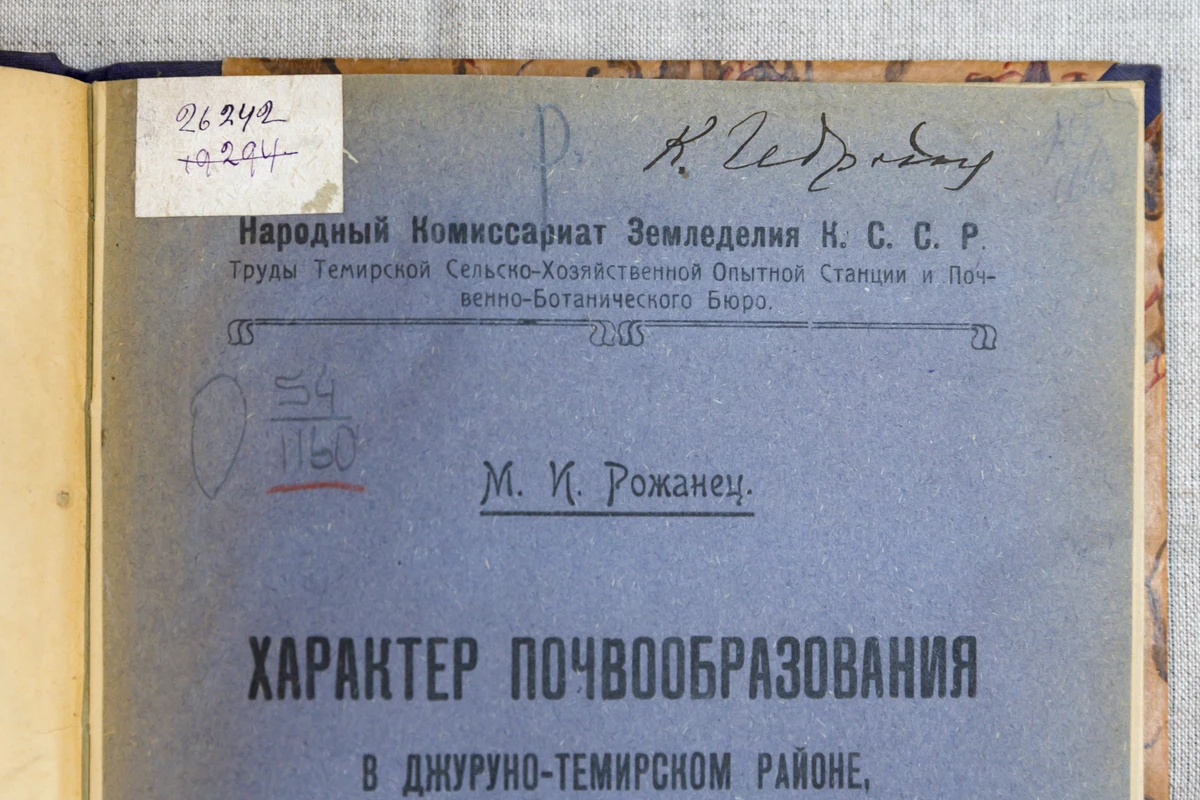
One particularly unexpected discovery was the stamp of the “Library of the Novozybkov State Wine Warehouse No. 5” on a book by Jerome K. Jerome. Who would have thought that wine warehouses had libraries too?
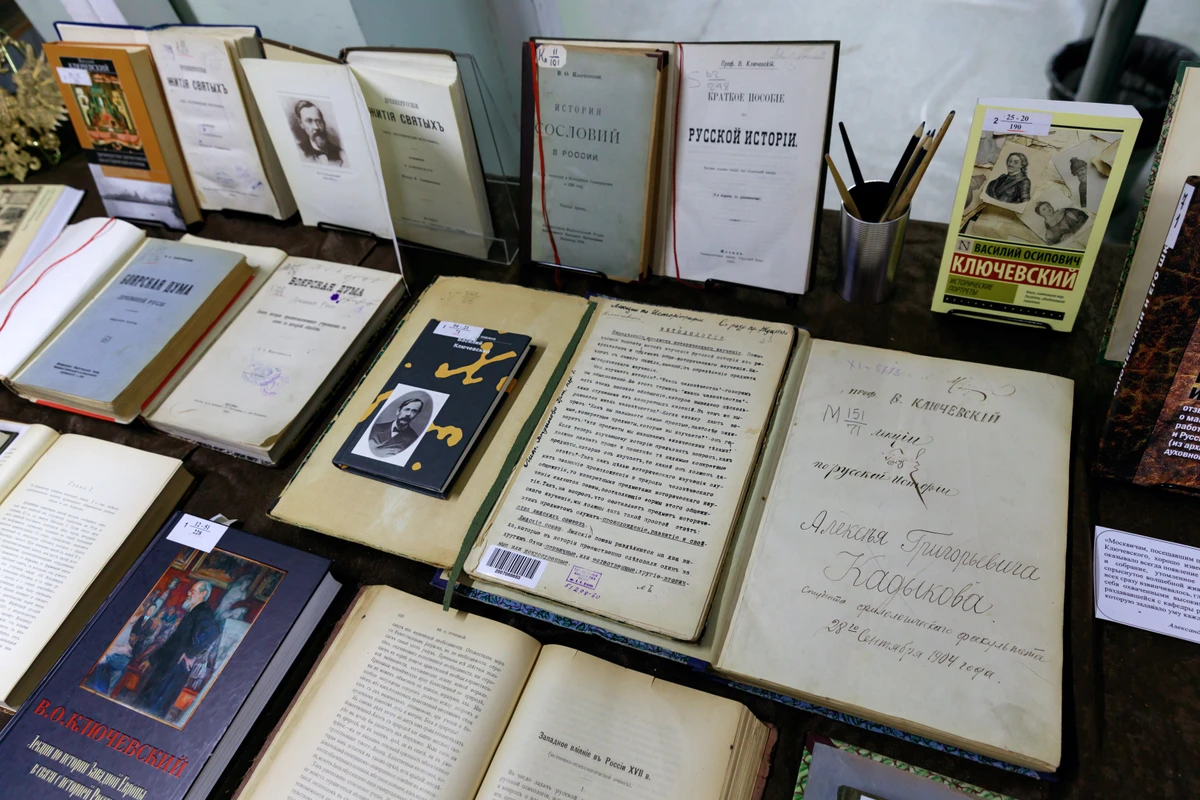
Equally noteworthy is the copy from Klyuchevsky’s personal library, inscribed by its author, historian Sergei Mikhailovich Seredonin: “To the deeply respected Vasily Osipovich Klyuchevsky”. This volume entered the USSR State Library in 1937.
The curators also have an amusing observation: the more scholarly a person, the less legible their handwriting tends to be. Take K. Giedroyc, for example—a scientist whose signature on a book is almost unreadable. However, that did not prevent him from leaving his mark in library history.
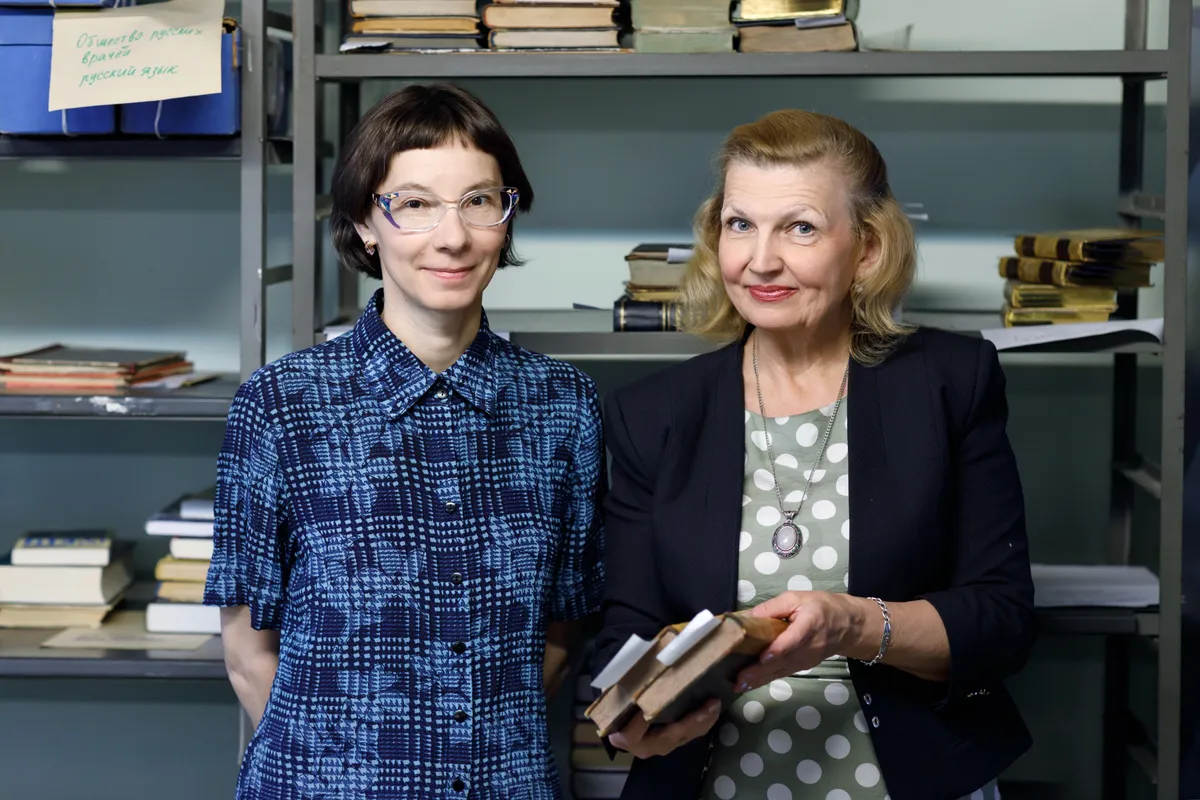
Head Librarian of the Research and Methodology Sector Yulia Vishnyakova and Head Librarian of the Research and Methodology Sector Olga Boldyreva
Photo: Maria Govtvan, RSL
Participation in Events
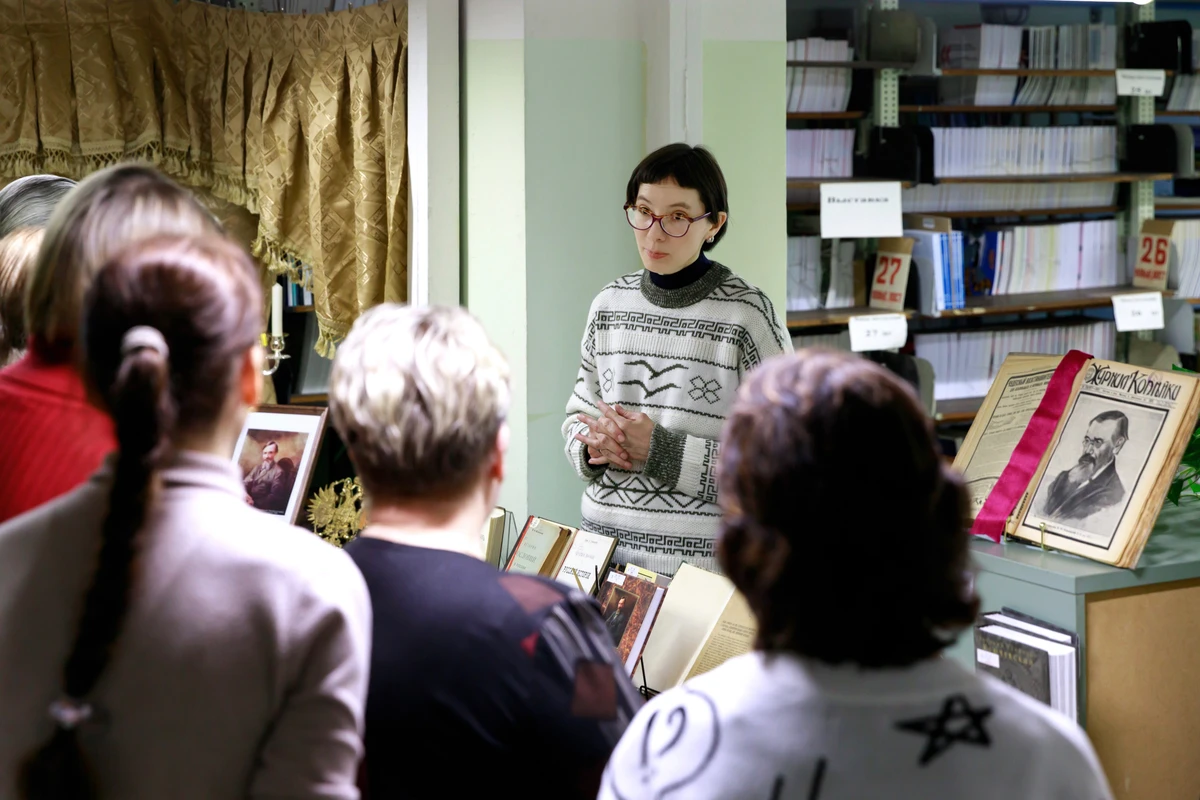
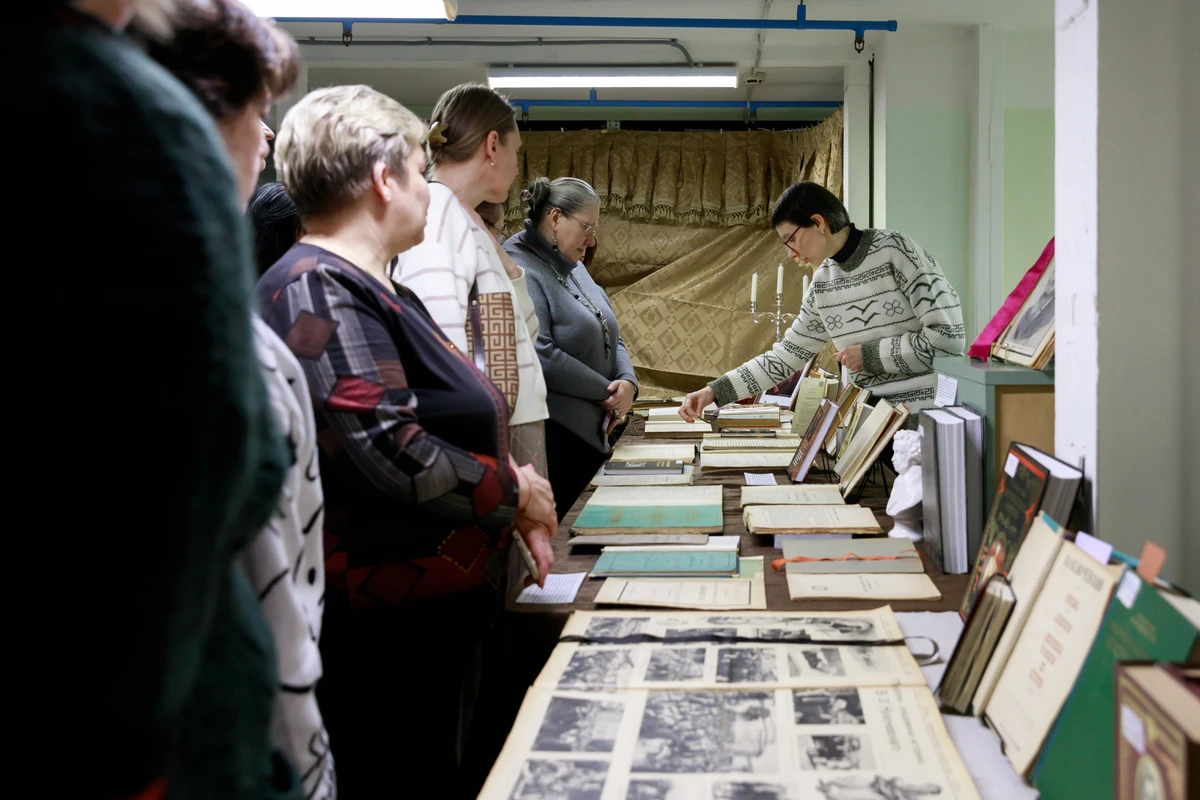
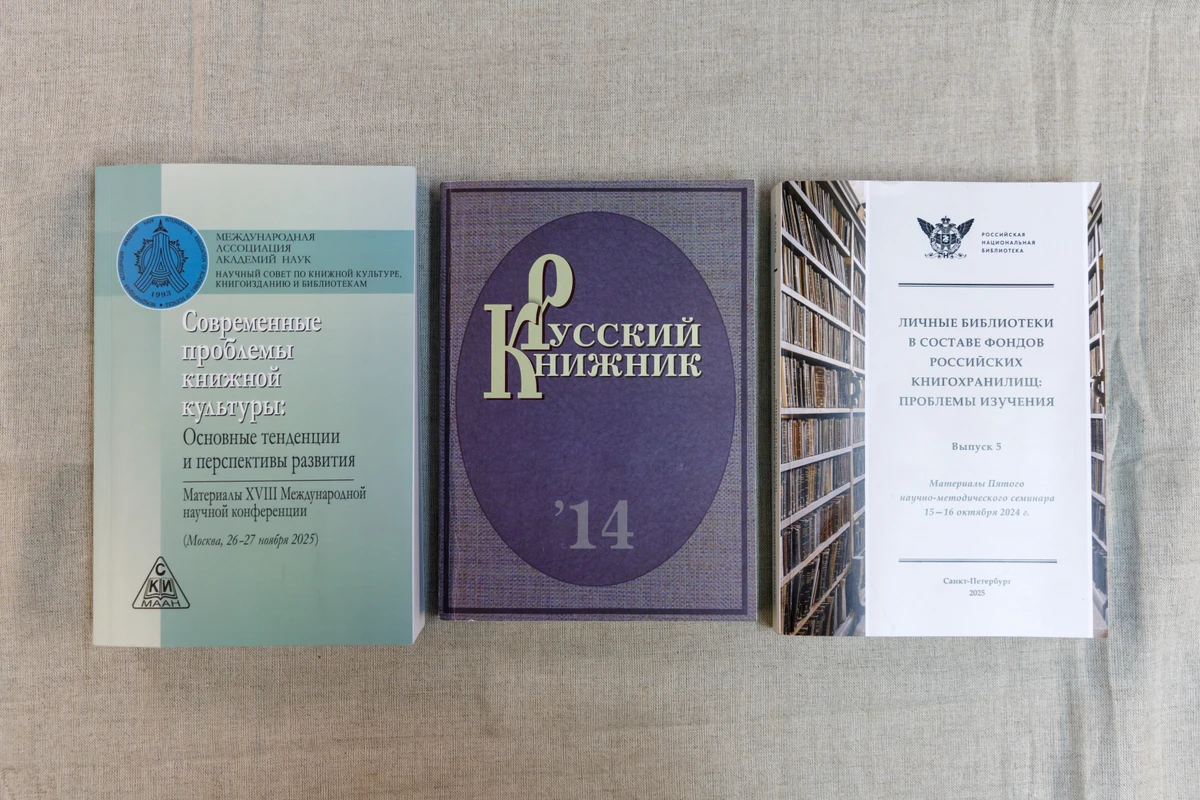
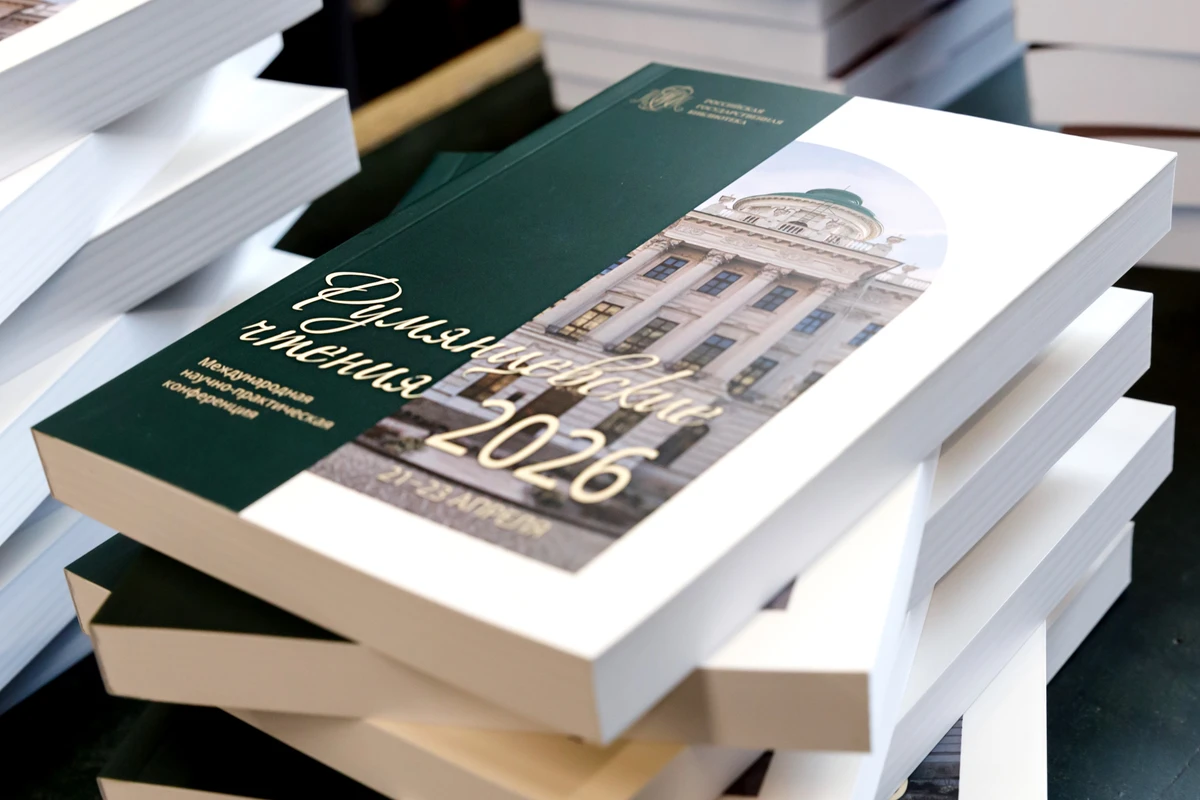
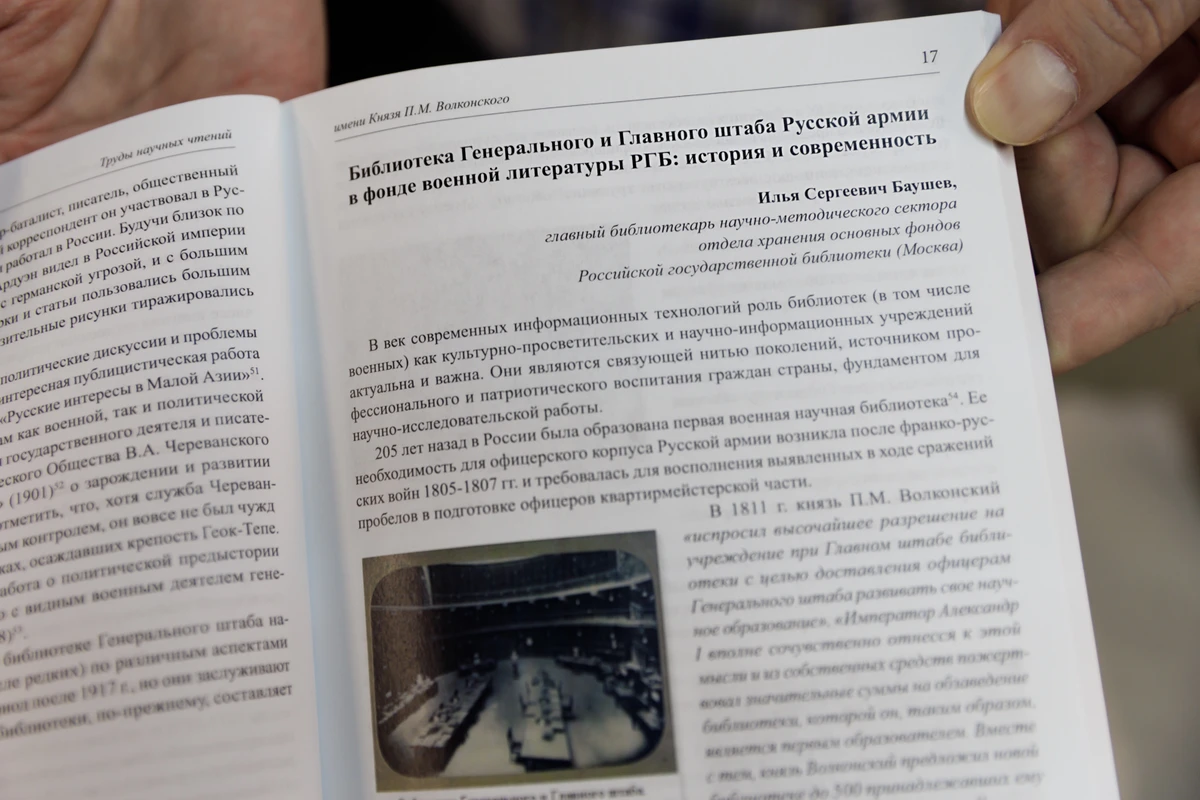
The stories and provenance marks that are uncovered do not simply remain filed away in card indices. They are brought to life through public lectures, exhibitions, and scholarly articles. Staff from the sector share their findings at conferences—including the Rumyantsev Readings—publish in library and book-history journals, and engage with audiences at a wide range of venues, from museums to other libraries.
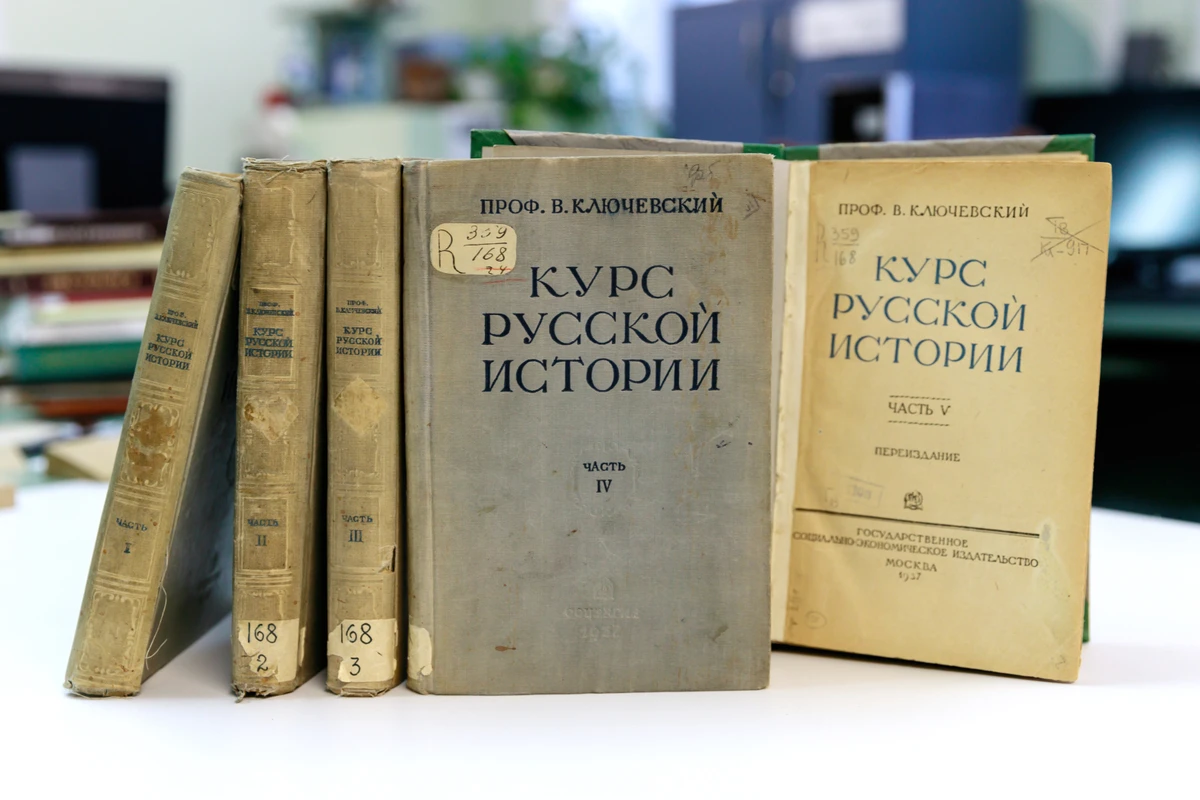
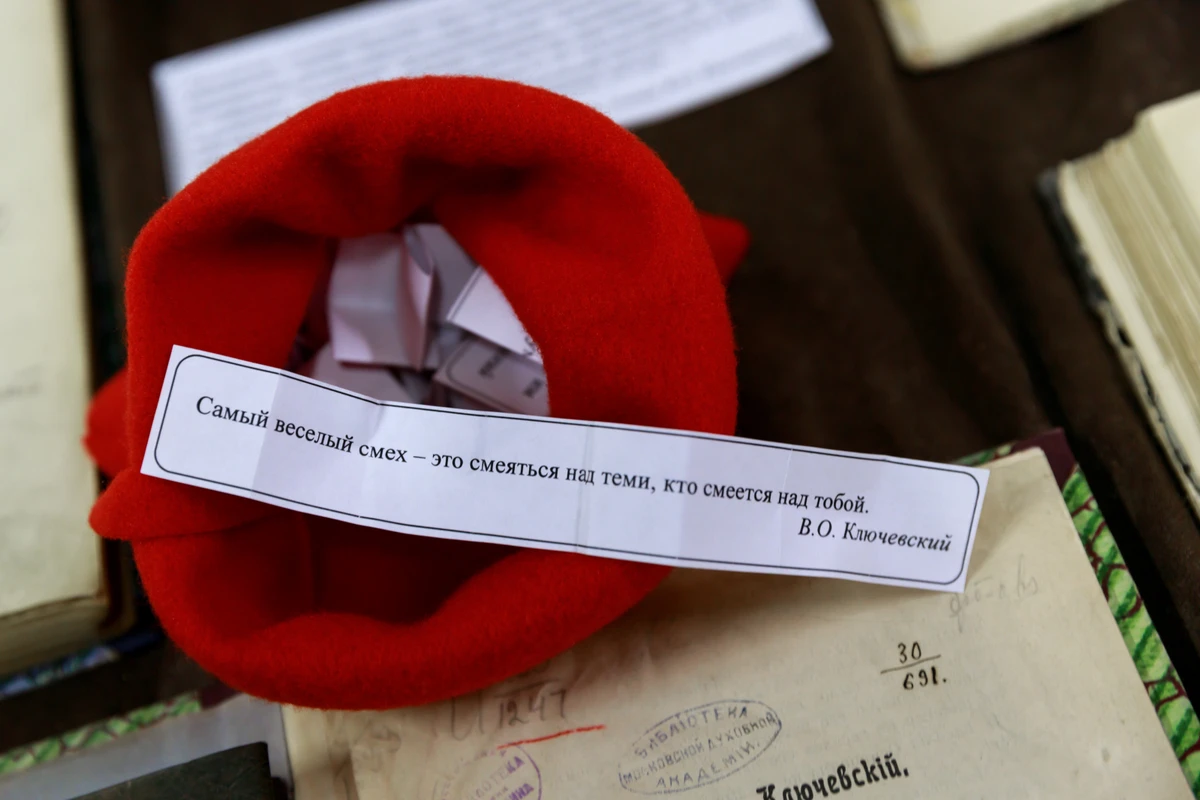
“Our lectures are not just article abstracts. They are the result of research—there is an element of discovery! Not long ago, while we were putting together a lecture on the historian Vasily Klyuchevsky, we found articles in journals with his students’ autographs. After the lecture, readers started ordering Klyuchevsky’s books. So the sector’s work actually influences reader demand”, says Yulia Vishnyakova. “People ask questions, they say they came for one lecture and walked away with so much more, and it was unexpected and great for them”, adds curator Olga Boldyreva.
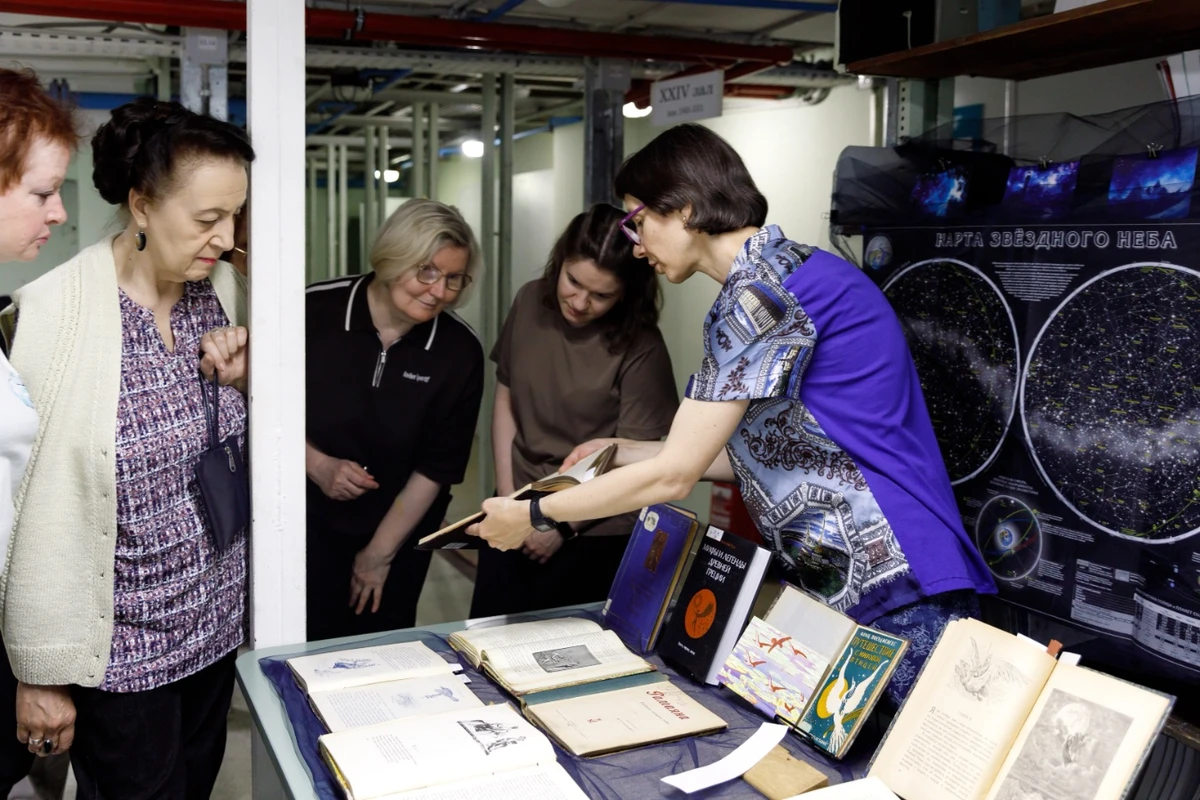
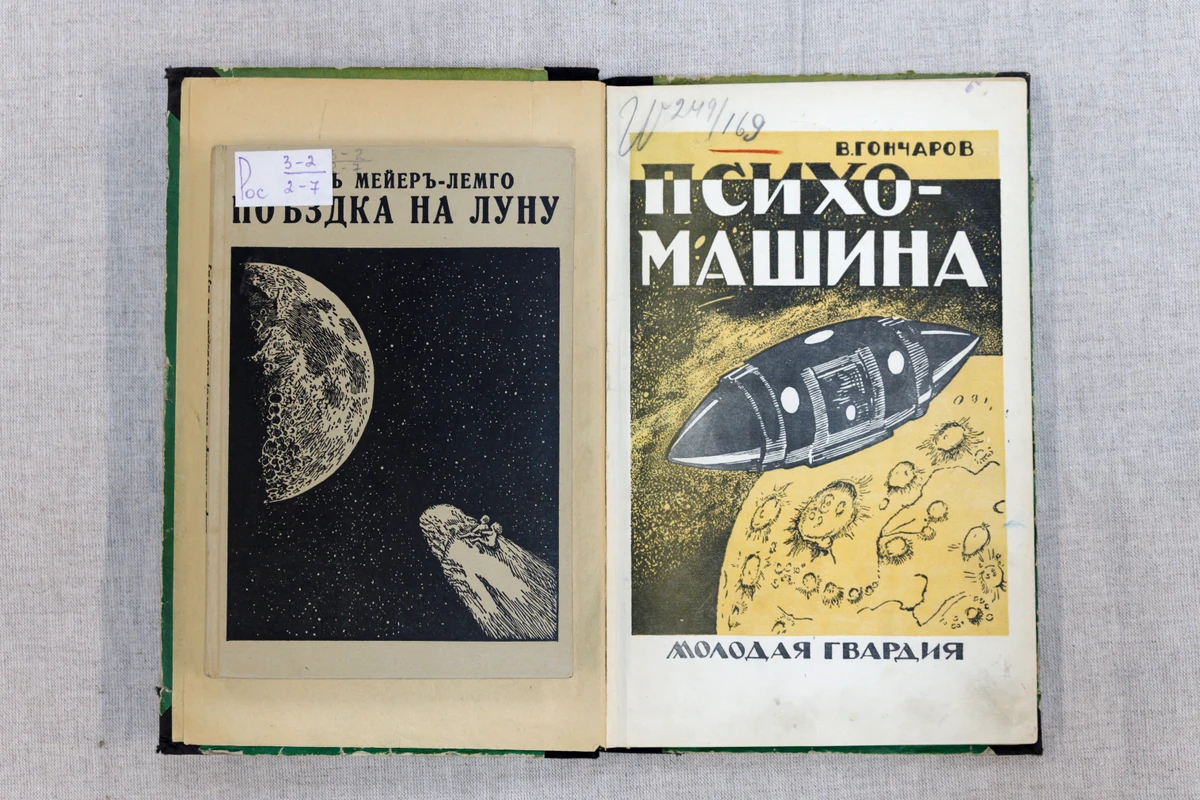
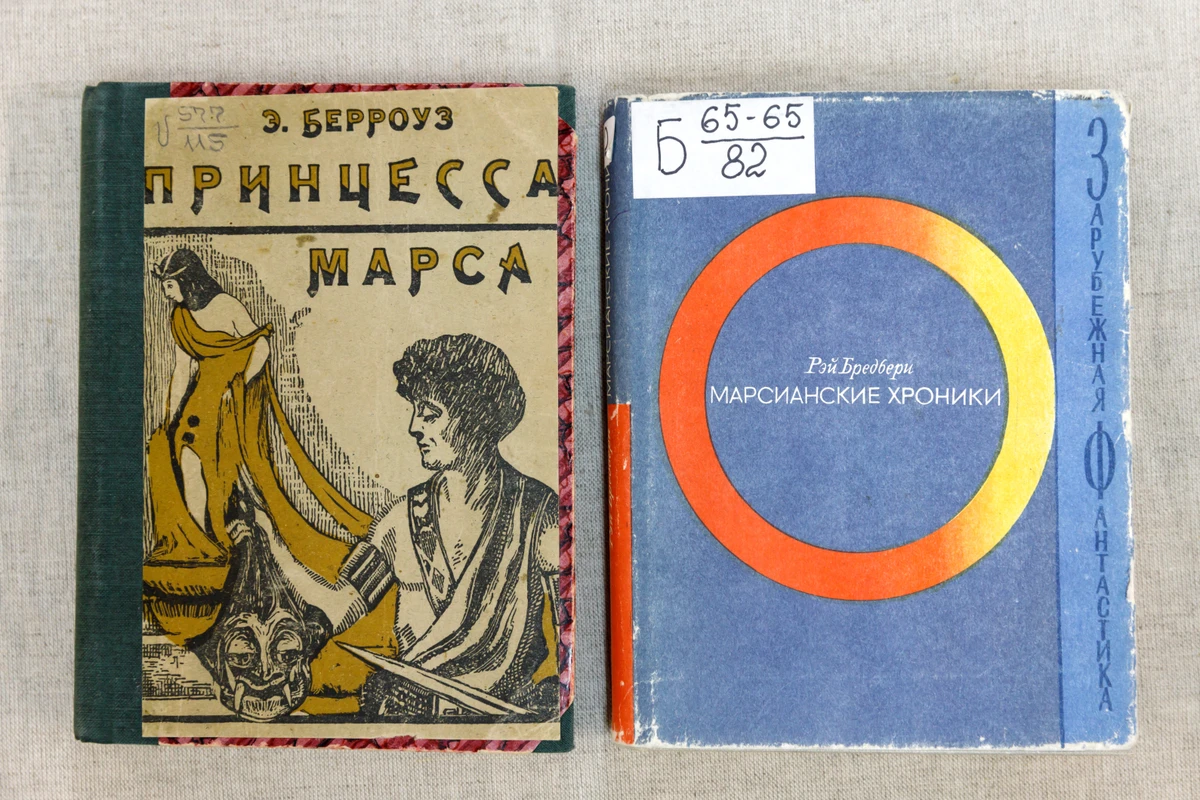
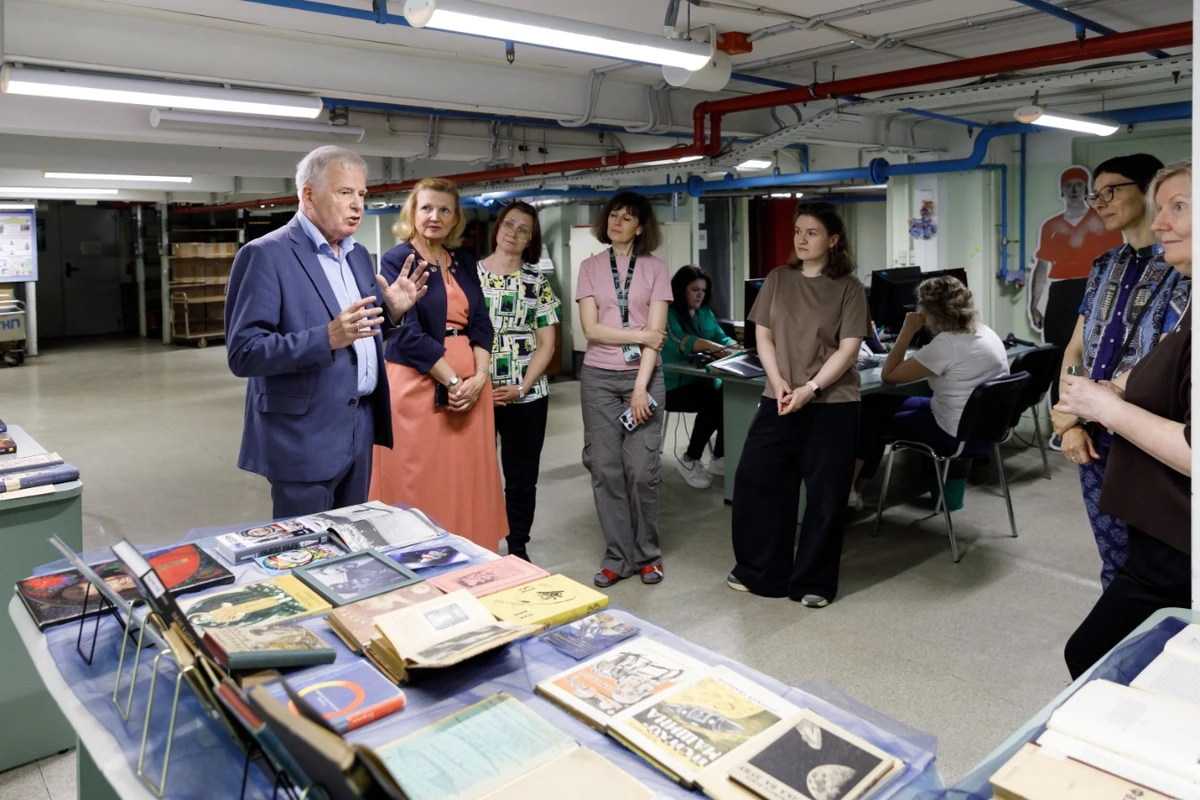
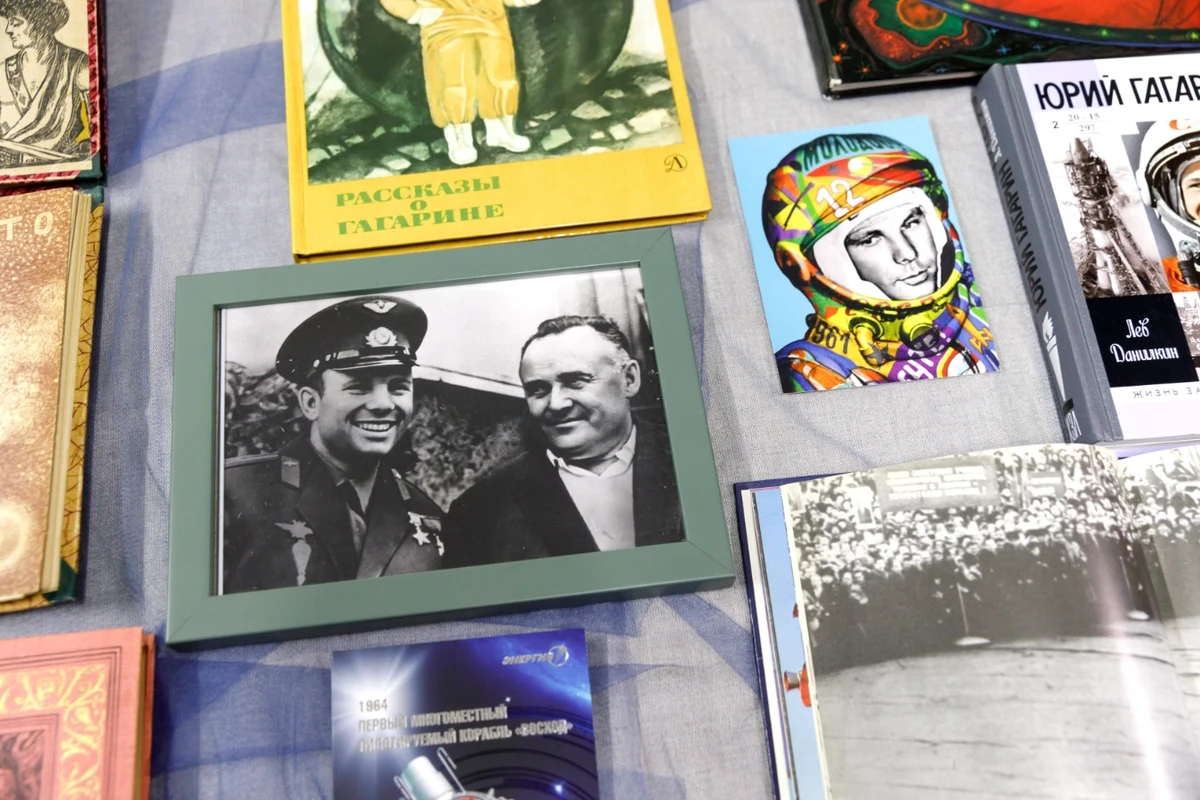
This is how the collection is unlocked—and how book heritage is transformed from an abstract concept into a living history, accessible both in the original and in digitised versions, and open to discussion with those who reconstructed these stories. The department’s recent lecture series explored space; this autumn will bring talks on the great storytellers—Giambattista Basile, the Brothers Grimm, Pavel Bazhov, and Aleksandr Afanasyev—while the year will conclude with theatre and the Silver Age.
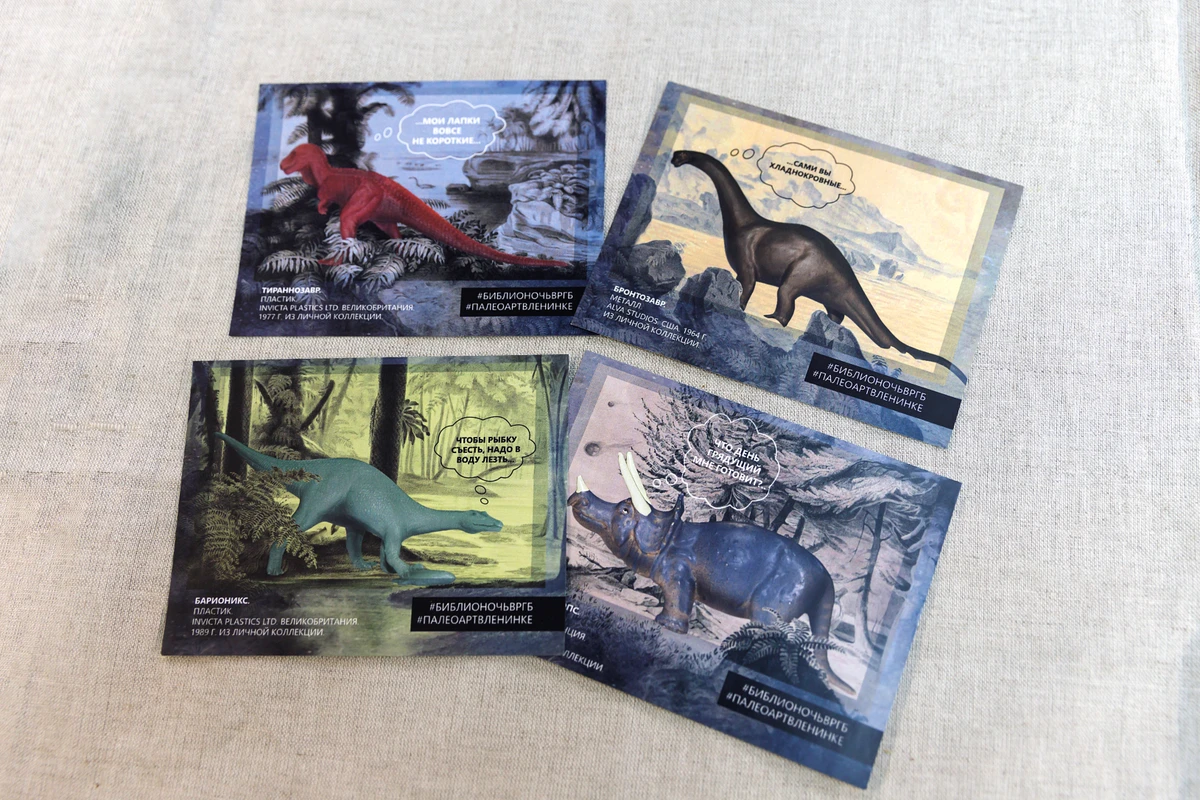
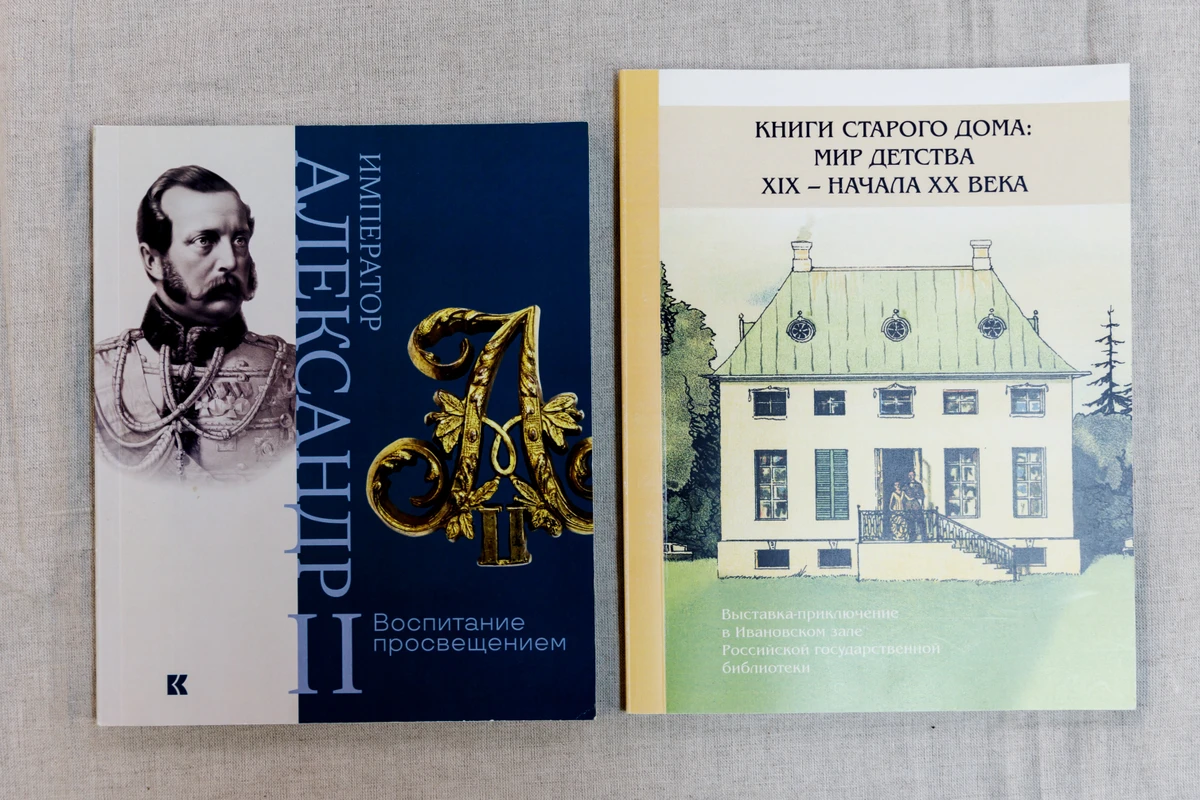
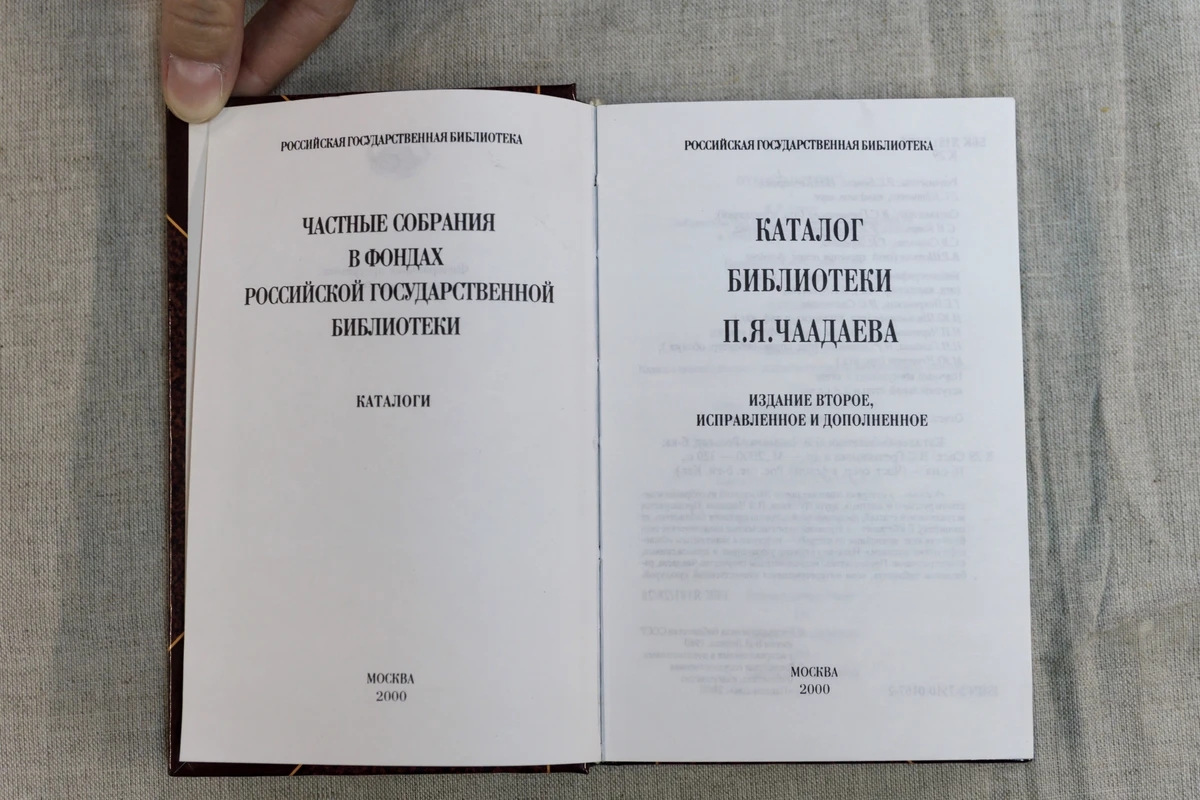
“Our collections are not confined to literature”, notes Ilya Baushev, the sector’s head. “We hold, for instance, dinosaur postcards, which we exhibited during a Biblionight, and exhibition catalogues. These items, too, are documents, and they are an integral part of our book heritage”.
Collection Preservation Sector
Book monuments, provenance research, and public engagement—these are what the reader sees, but they are just the visible part of a much larger undertaking. Before a book can reach the reading room, one more invisible but essential job must be done, and it falls to the Collection Preservation Sector. This is where books are protected from the effects of time, selected for restoration or digitisation, and coordinated for microfilming or rebinding. In the event of an emergency, the sector mobilises as a rapid response unit, ready to protect the collections at a moment’s notice.
“The sector operates as a coordination centre”, explains its head, Larisa Komissarenko. “We gather materials from across the library—with the exception of the Department of Manuscripts—that show signs of wear or damage, send them as a batch to the Restoration Department, and track their safe return”.
How do you know a book needs rescuing? It’s visual: a spine that is beginning to detach, a block of pages that is loosening, torn or dog-eared leaves. Such damage is spotted by staff during the daily work of retrieving books for readers or during routine checks of the shelves. Once identified, damaged copies are placed on a designated shelf, and a decision is made about the appropriate intervention
“If we can fix something on the spot—we do it”, says curator Irina Mukhina. “A torn page, a loose spine—we can handle that. But leather bindings? We leave those to the Department of Restoration. They have the right materials for each period”. For books that are unique or in a fragile state, the priority is digitisation. Only after that has been done does the question of physical restoration come up—and that is often a lengthy undertaking.
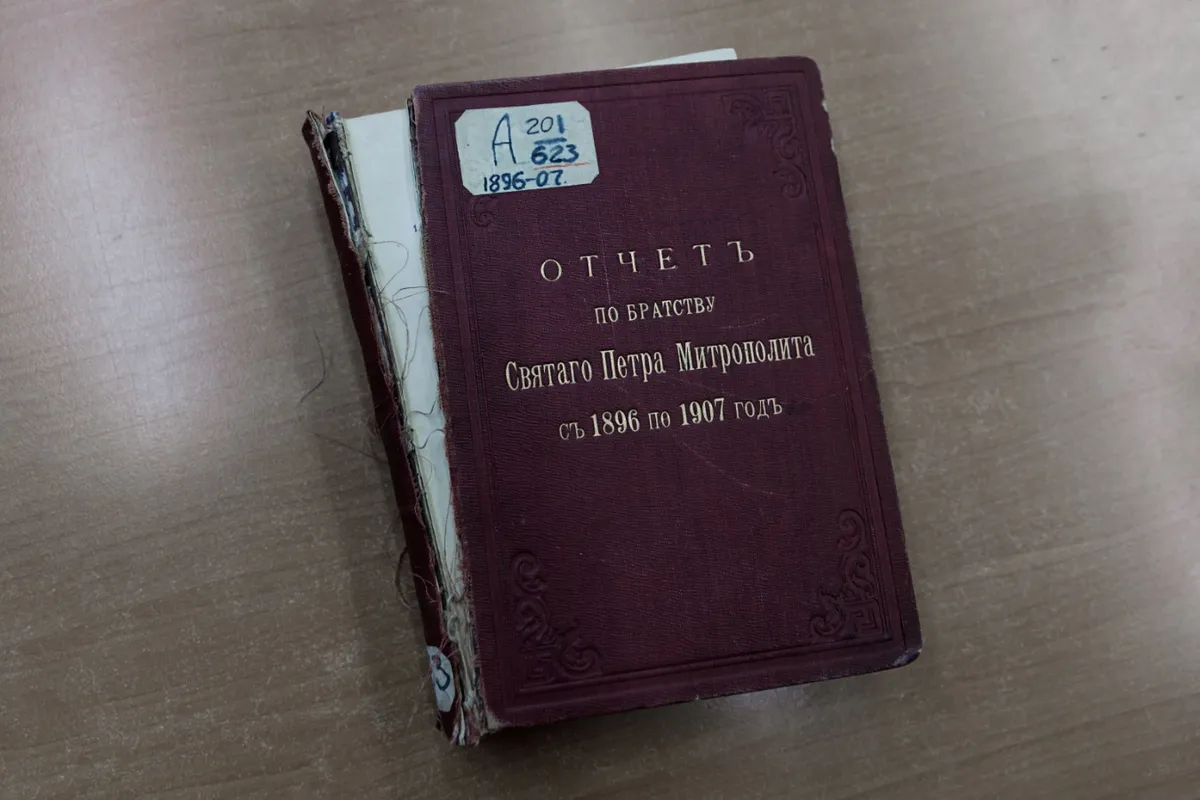
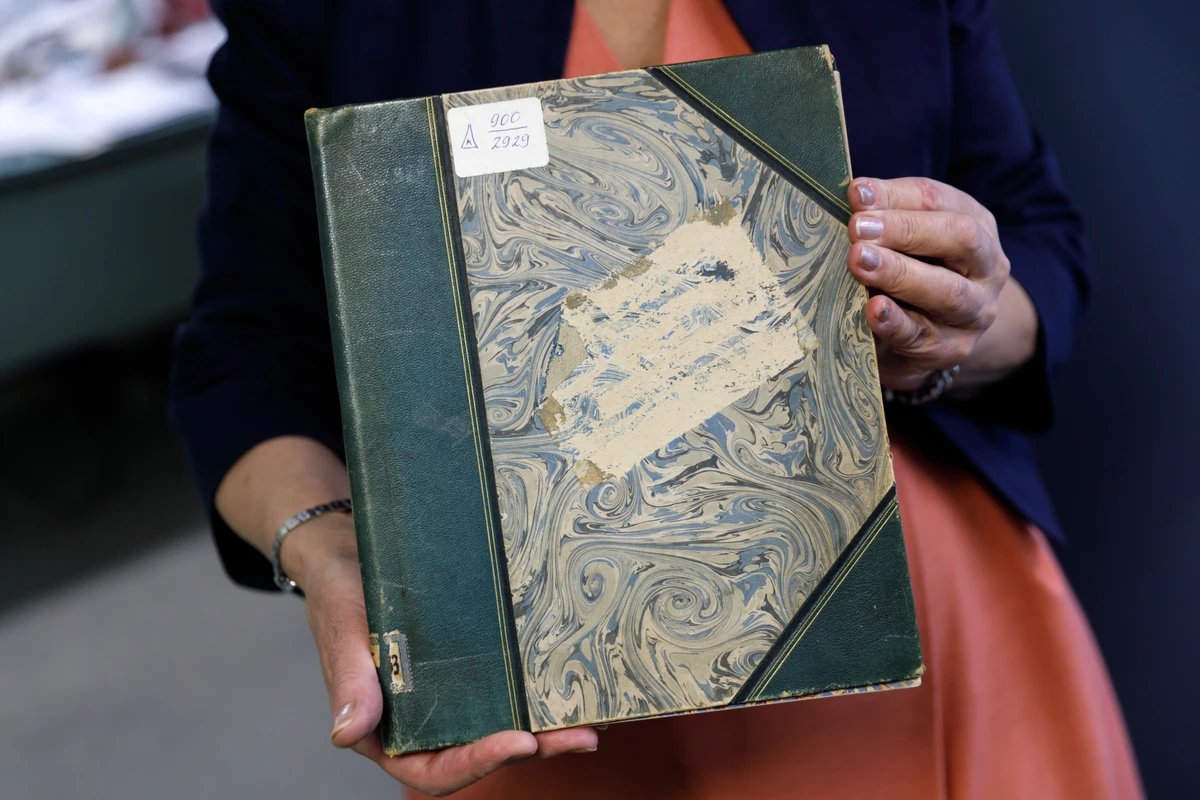
A book selected by the Collection Preservation Sector for restoration
Photo: Maria Govtvan, RSL
The Preservation Sector’s role is not limited to deciding which books need restoration. It also coordinates a range of other preservation measures—scanning, microfilming, photocopying, rebinding, and phase preservation (placing items in acid free cardboard boxes). Each of these activities has its own annual targets.
The figures give a sense of the sector’s output:
Rebinding – 20,400 books
Scanning – 1,300,000 pages
Microfilming – 500,000 frames (about 1 million pages)
Photocopying – 500 pages
Preventive repair (carried out by the sector) – 100 books and 2,000 pages
Sent to the Department of Restoration – 60,600 pages or 300 spines
“We calculate everything to meet the planned targets. Planned economy!” say the staff.
Beyond the routine work of preservation, the sector also bears responsibility for emergency response. Water leaks, sudden environmental fluctuations, and mould outbreaks are all potential threats, and staff must be equipped to act quickly and with precision to limit the damage. Curators undergo regular training, are well versed in the procedures, and call in specialist services whenever necessary. The engineering department monitors the climate systems, but it is the sector staff who are best placed to notice deviations and report them. Dusting the books, meanwhile, is a task carried out by each storage group on its own.
Much of the sector's daily work takes place far from the reader’s gaze. Consider the electronic catalogue: a journal entry is never just a single line. In order for a reader to request a specific issue, the staff must enter the information at three distinct levels—the title of the journal, the annual volumes, and the individual issues contained within them. This is the three level record system, and for journals that have been running for decades, it represents a colossal amount of painstaking work.
Another example of the sector’s invisible work is the book that is temporarily unavailable due to fragility. When, after a period of time, the reader finds that it can once again be ordered, that change is the result of behind the scenes effort—whether through interlibrary loan to fill missing pages, digitisation, or careful restoration. The temporary withdrawal of an edition is never a sign of neglect; it is a sign that work is in progress, with the ultimate goal of returning the book to the reader.
There is one more thing worth bearing in mind—both for us and for the people who use our libraries: books do not last forever. They are fragile. They decay with time, react to fluctuations in temperature, and can be harmed by rough handling. That is why we ask readers not to eat or drink in the reading rooms—not from a desire to impose rules, but out of a respect for the pages. And if you need only a short passage, a simple photograph is a safe and effective way to capture it—one that also does away with an ancient library problem: torn out pages. So let us be grateful for modern technology. Our shared task is to preserve these books for those who will come after us—including the children who will find their way to the RSL in years to come. Let us protect this collection, together!


Collection Organisation Sector
The Collection Organisation Sector is where every book gets its shelf code, but that is only part of the story. This is also where errors are untangled, the kind that stop readers from locating an edition in the catalogue, and where the steady daily stream of new acquisitions is processed. And sometimes, hidden among those new arrivals, genuine modern treasures are discovered.
Errors and Investigations
The hundred year history of the Department of Storage of Main Collections has been anything but static. Books have been evacuated during wartime, entire sections have been moved, shelves have been reorganised, and materials have been transferred between departments. The traces of these events are still felt today—most notably in the Electronic Catalogue, where errors can surface unexpectedly.
A reader orders a book they have found in the catalogue, but the system responds with a refusal: “Error in Electronic Catalogue”, “Duplicate record”, “No such shelf”. When this happens, the Collection Organisation Sector swings into action.
“And that is when the investigative work starts”, explains curator Natalya Seryozhina. “We check the Electronic Catalogue, the accession registers, the registration records, and the storage addresses. We trace the book through all the documentation, verifying it against its place on the shelf. We have a specific sequence of steps that leads us to the answer”.
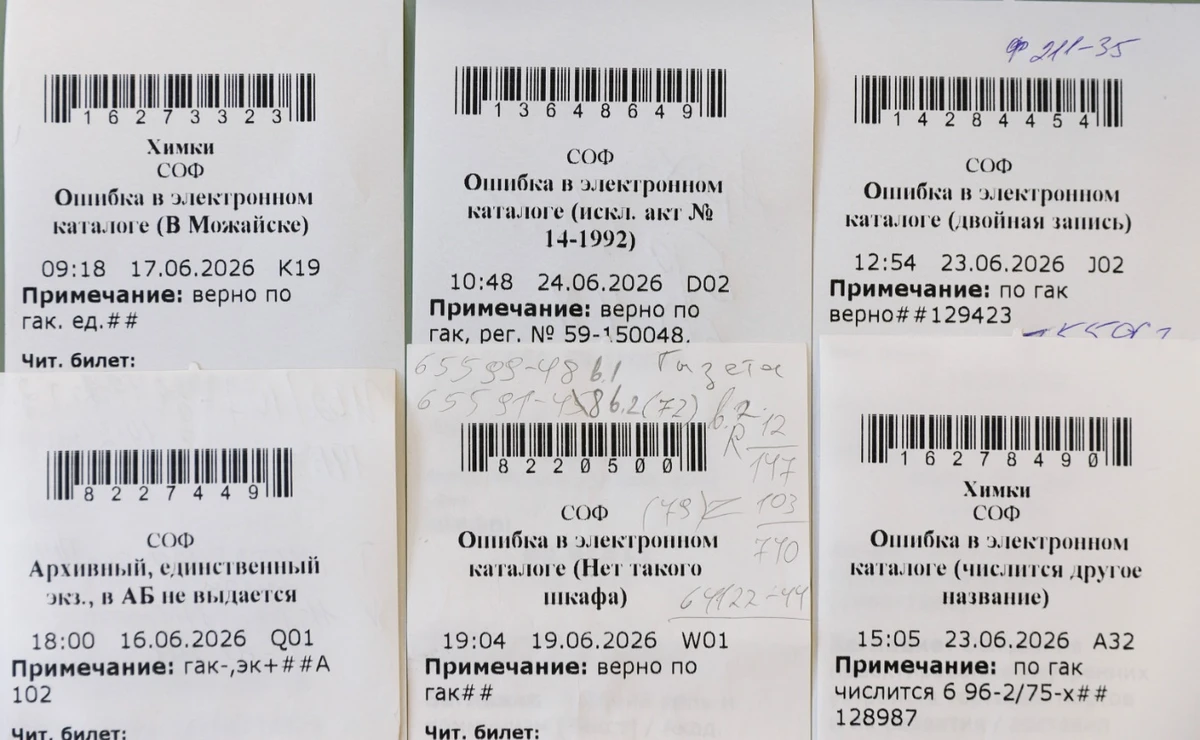
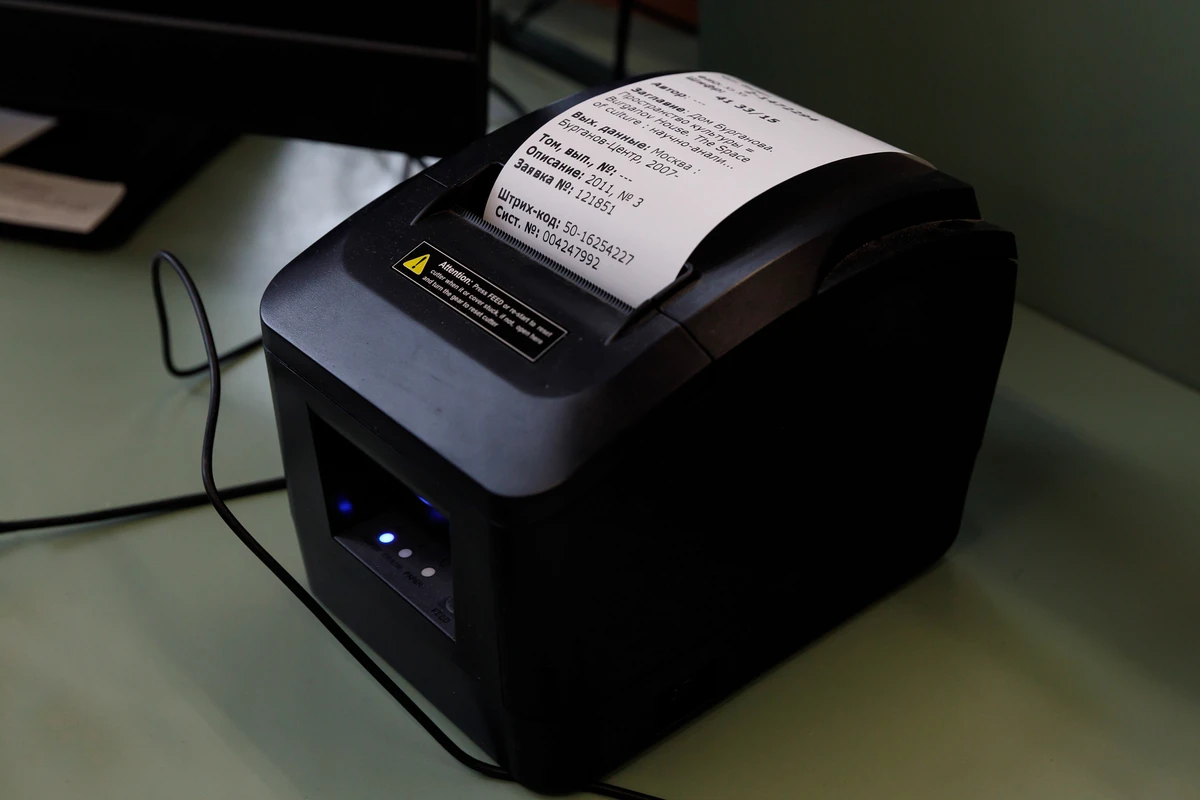
Sometimes the source of the problem is immediately obvious—a typo, a transposed shelf code. But in other cases, the investigation can stretch on. The most common obstacle is retroconversion: when the old card catalogue was digitised, the technology misread both digits and letters. Cabinet 21 became Cabinet 71. 393 became 333. The letter “E” was read as “F”. “We start playing with the numbers, trying substitutions, making educated guesses”, explains curator Evgenia Churilina. “If the shelf code doesn't match, we check the nearest alternatives”.
And occasionally, an investigation reveals something wholly unexpected.
Here is an example. In May, a reader ordered a wartime children's book. In September, he ordered the same book again. When it arrived, he said: “This isn't the same. In May, the monkey on the cover was standing. Now it's sitting”.
The staff were puzzled—same shelf code, same author, same title. What was going on? The investigation revealed that the book had been published in two print runs—a standard edition (sitting monkey) and a rare additional edition (standing monkey). The same book existed with two different covers. This was uncovered entirely by accident, thanks to a reader who had ordered the same book twice.
Not every search ends in success. Some books are simply gone—lost, moved, or weeded out long ago. In those cases, the staff inform the reader that the book is no longer on the records and initiate the removal of the catalogue entry. But even then, the reader is not left in the dark. “We never leave anyone without a response”, curator Ekaterina Grachova assures. “There is always an answer”.
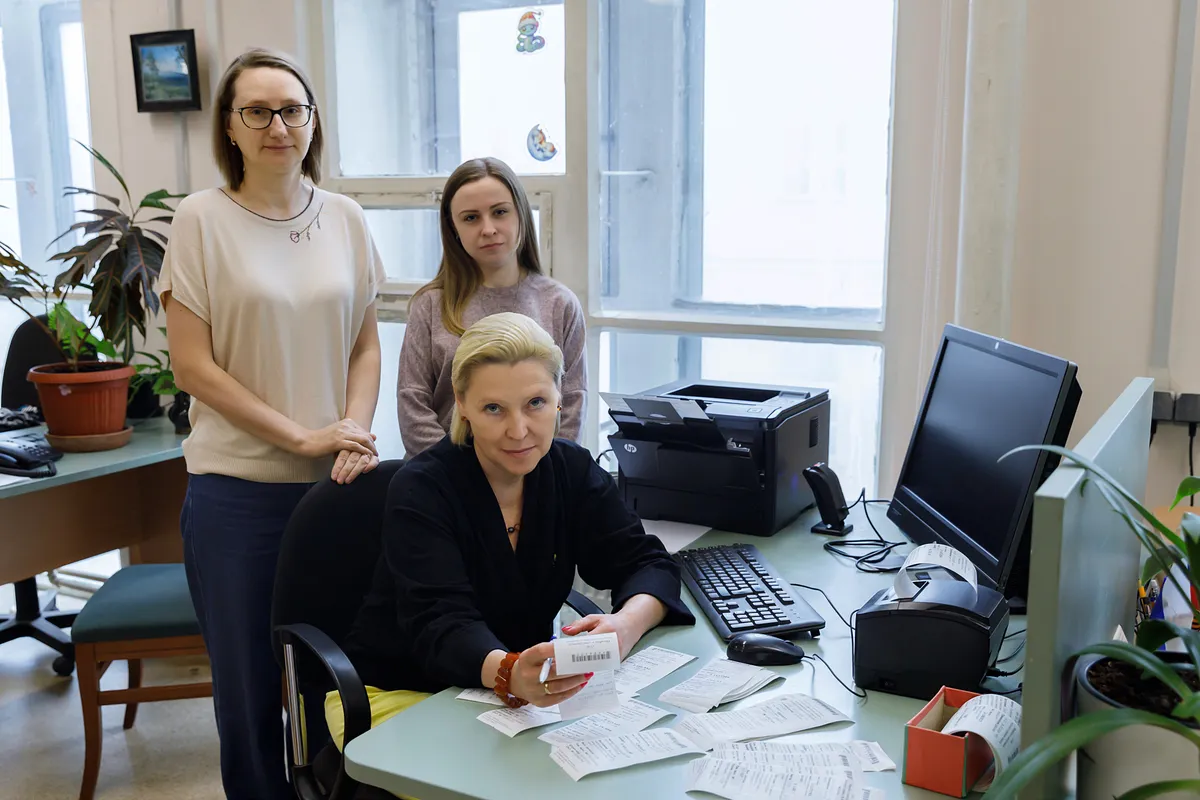
Staff of the Collection Organisation Sector: Head Librarian Evgenia Churilina, Head Librarian Ekaterina Grachova, and Head Librarian Natalya Seryozhina
Photo: Maria Govtvan, RSL
New Acquisitions: The Daily Flow
Every day, trolleys laden with new books arrive at the Collection Organisation Sector— anywhere between 300 and 700 copies, a steady stream that never seems to end. “This is the first stage”, says curator Nadezhda Danilova. “We take delivery of the books and begin the systematic sorting”.
What does “systematic sorting” mean in practice? First, the books are sorted by format—divided into standard, oversized or small. Bound volumes are set apart from unbound ones, and Russian language books are divided from those in foreign languages. Next, the books are arranged by content: academic works, textbooks, fiction. Multi volume sets get special marking, while foreign language books are organised by language group.
All this effort allows the book to end up on the right shelf and be easily found.
“Everything is clear-cut”, explain curators Elena Kuzina and Valentina Yakovleva. “There is no order of preference between format and content—it is not a matter of what is more important. We sort books by each criterion separately. To a reader, it probably looks overwhelming, but to us, working with this every day, it all makes perfect sense”.
The entire flow of new books has already been filtered according to the acquisition policy: only profile matching literature enters the Main Collection. Other publications are sent to various departments or storage facilities.
“Once the books have been sorted, each copy is assigned a shelf code, labelled and sent to the appropriate level. The book reaches the shelf—and becomes available for ordering”, says curator Irina Dolbilova.
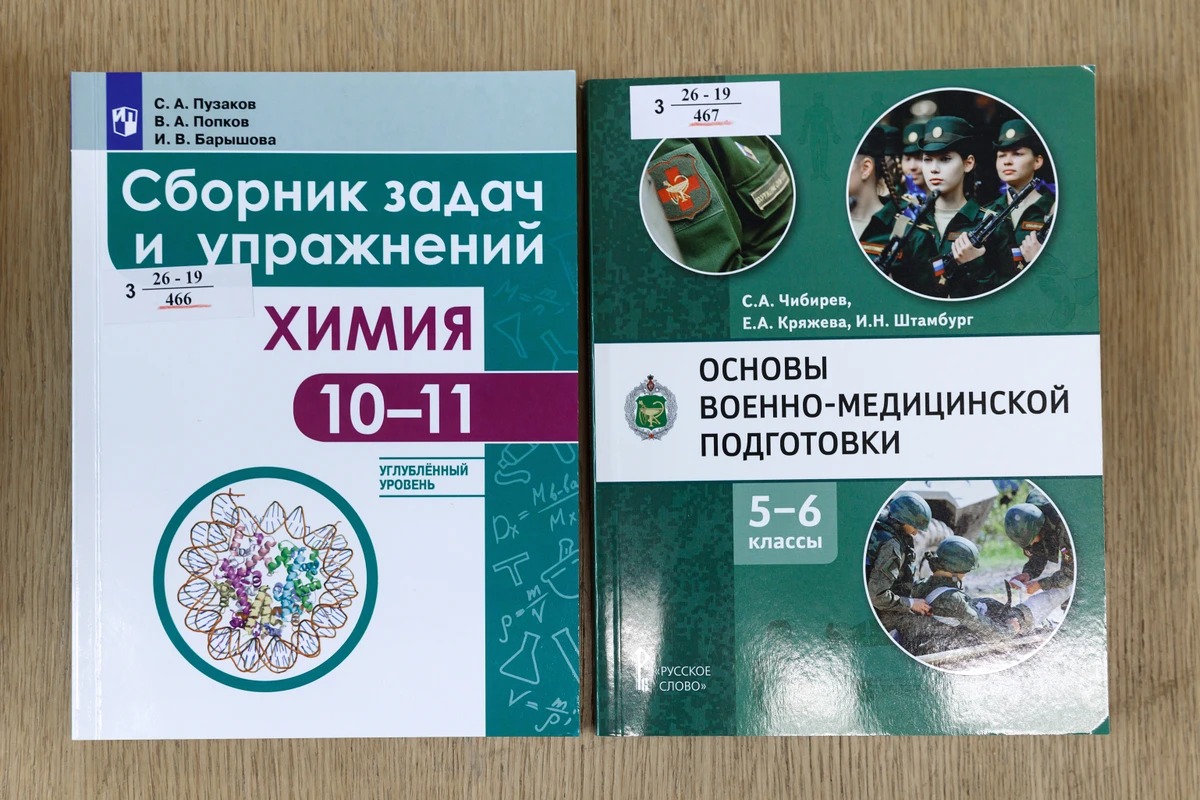
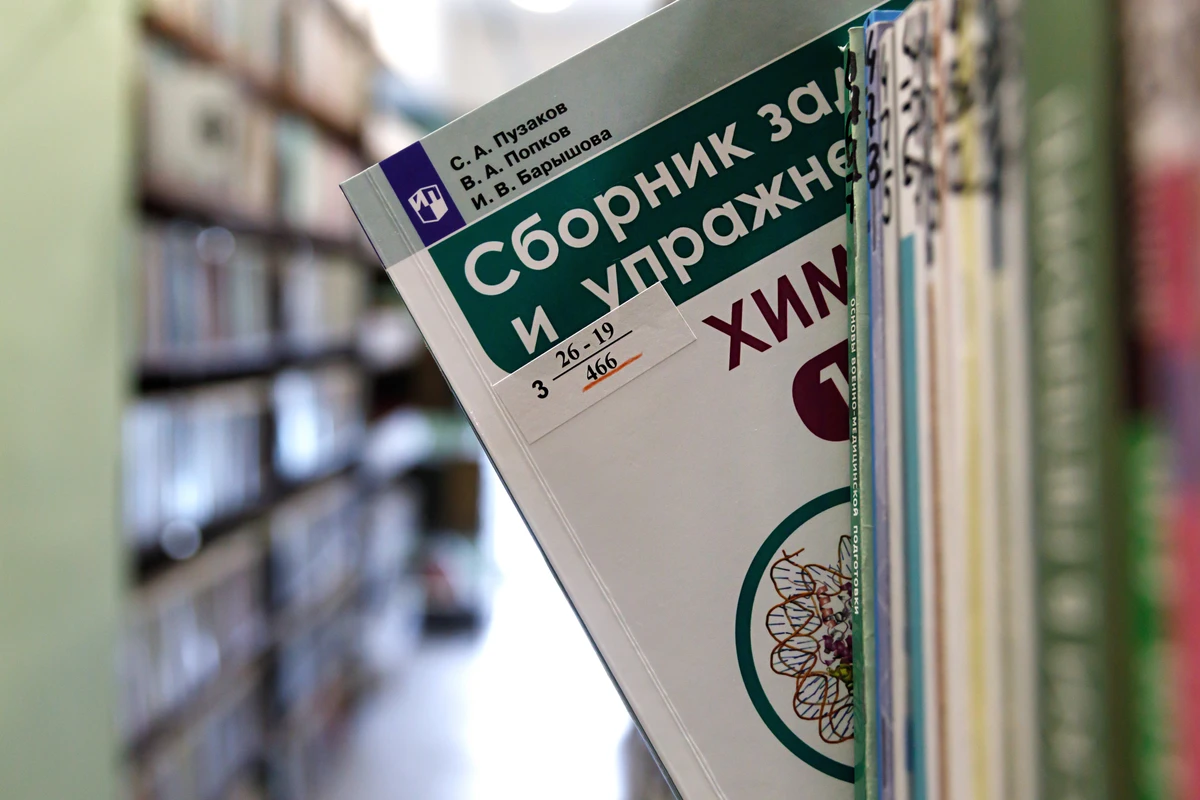
Unusual Contemporary Publications
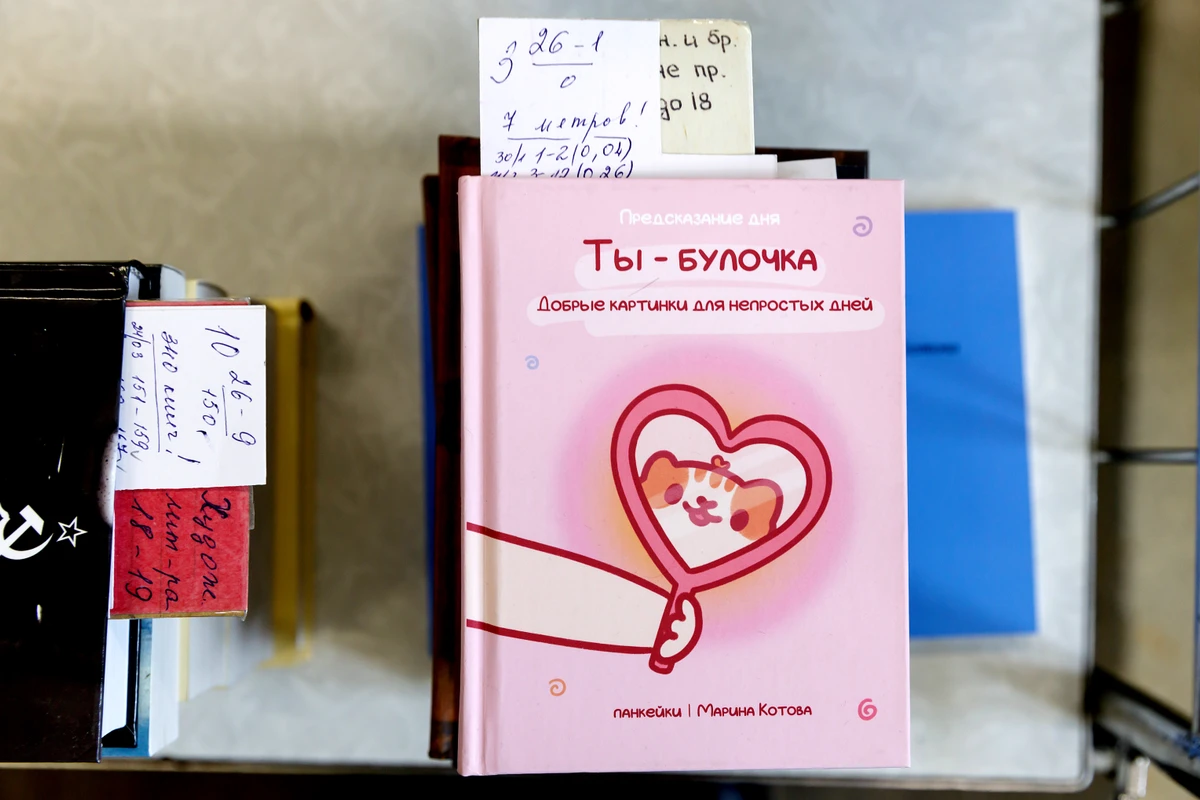
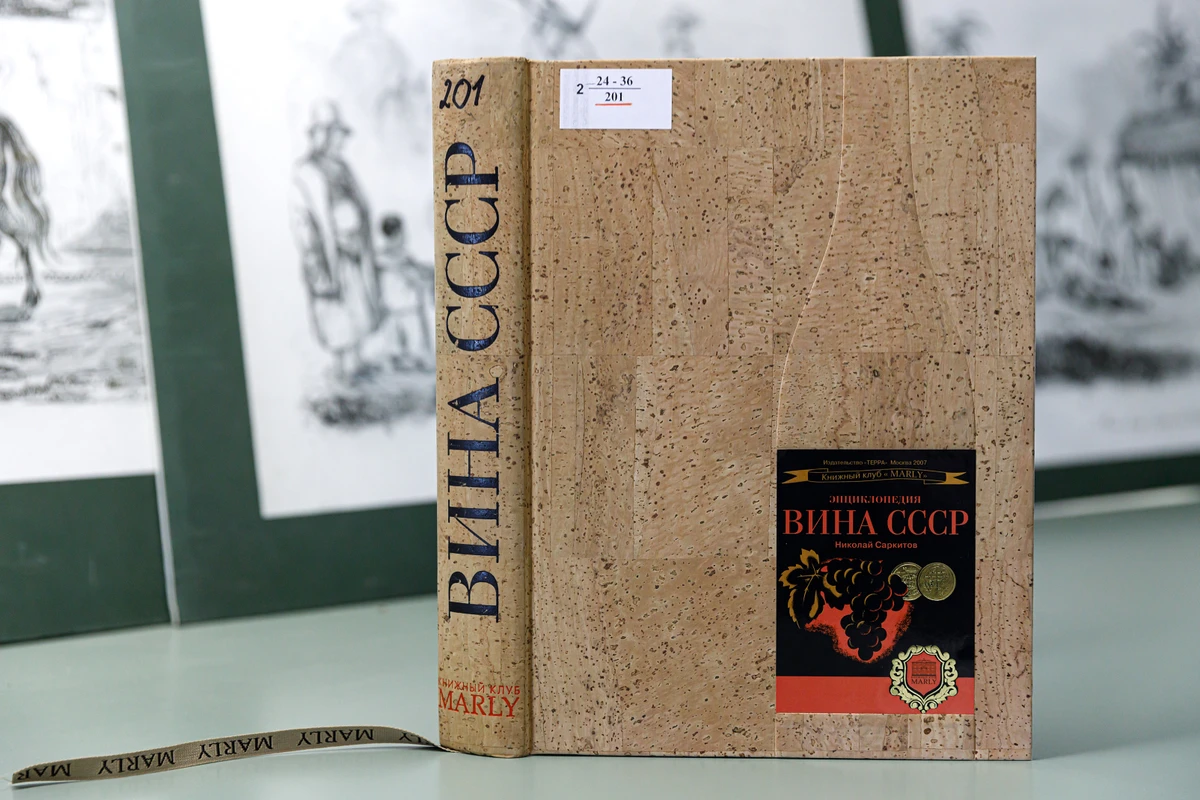
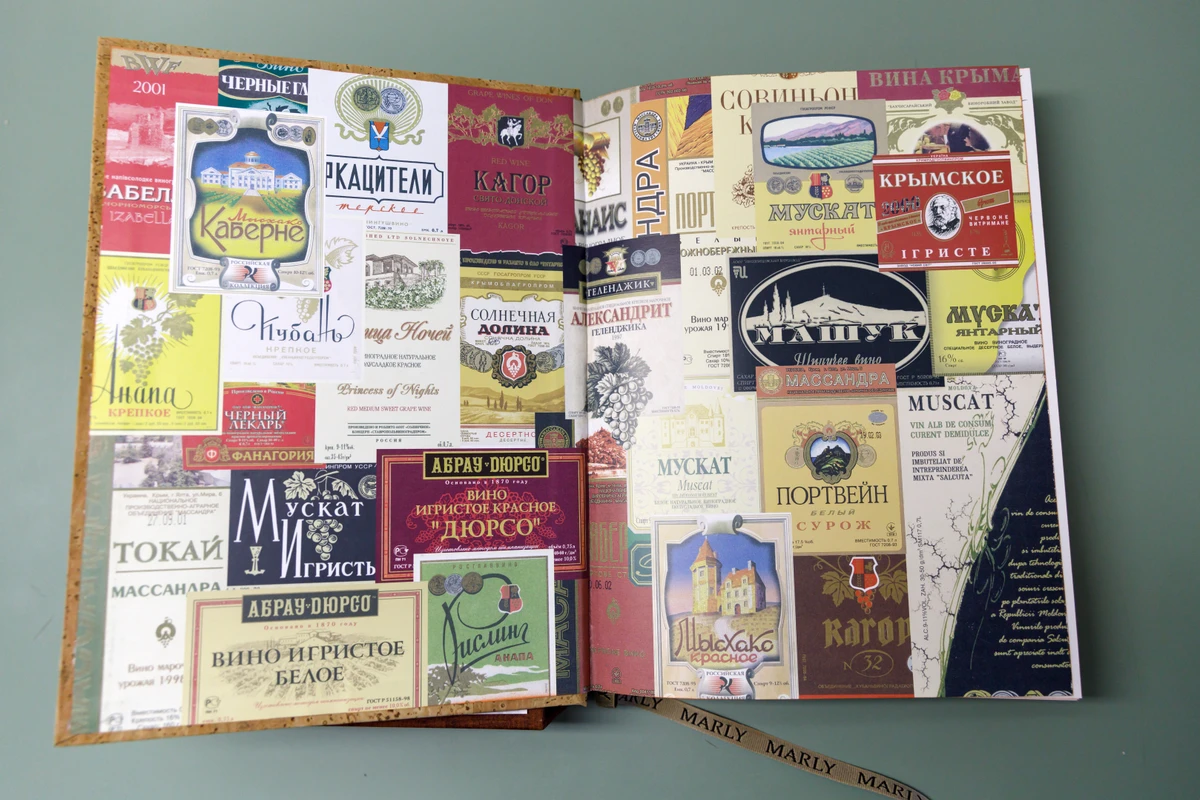
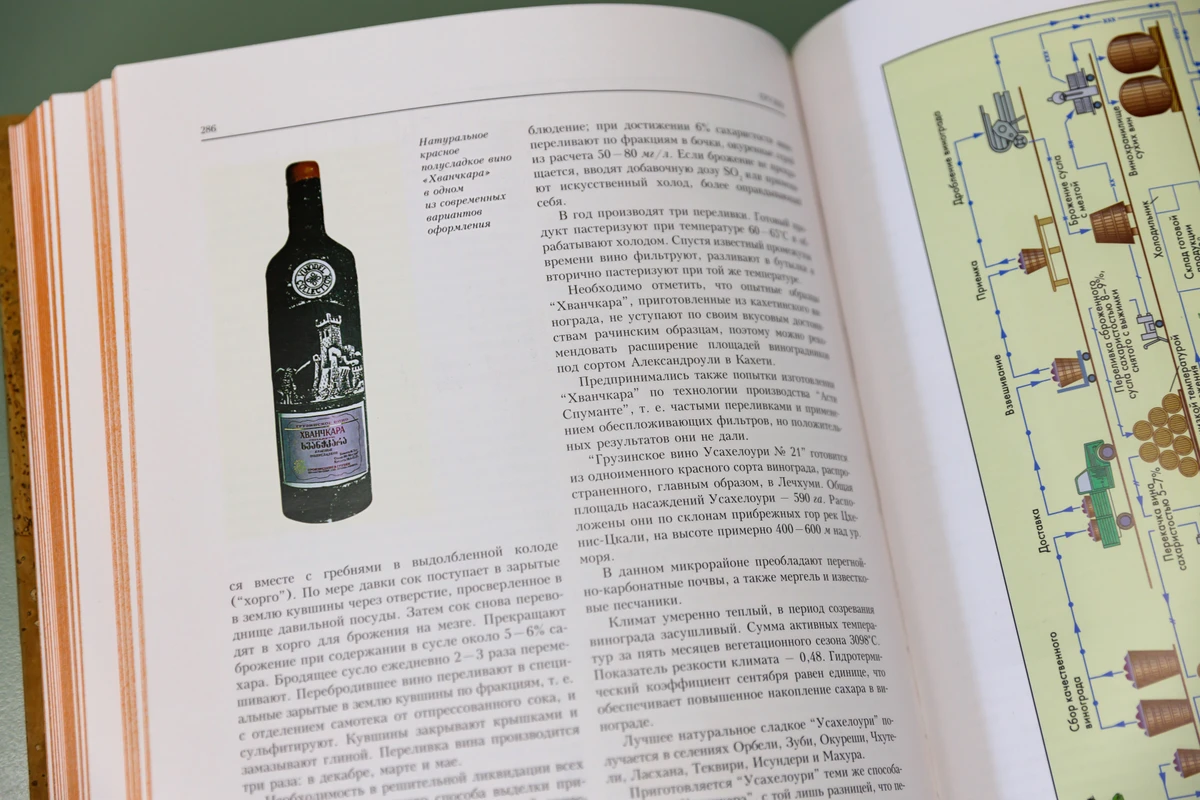
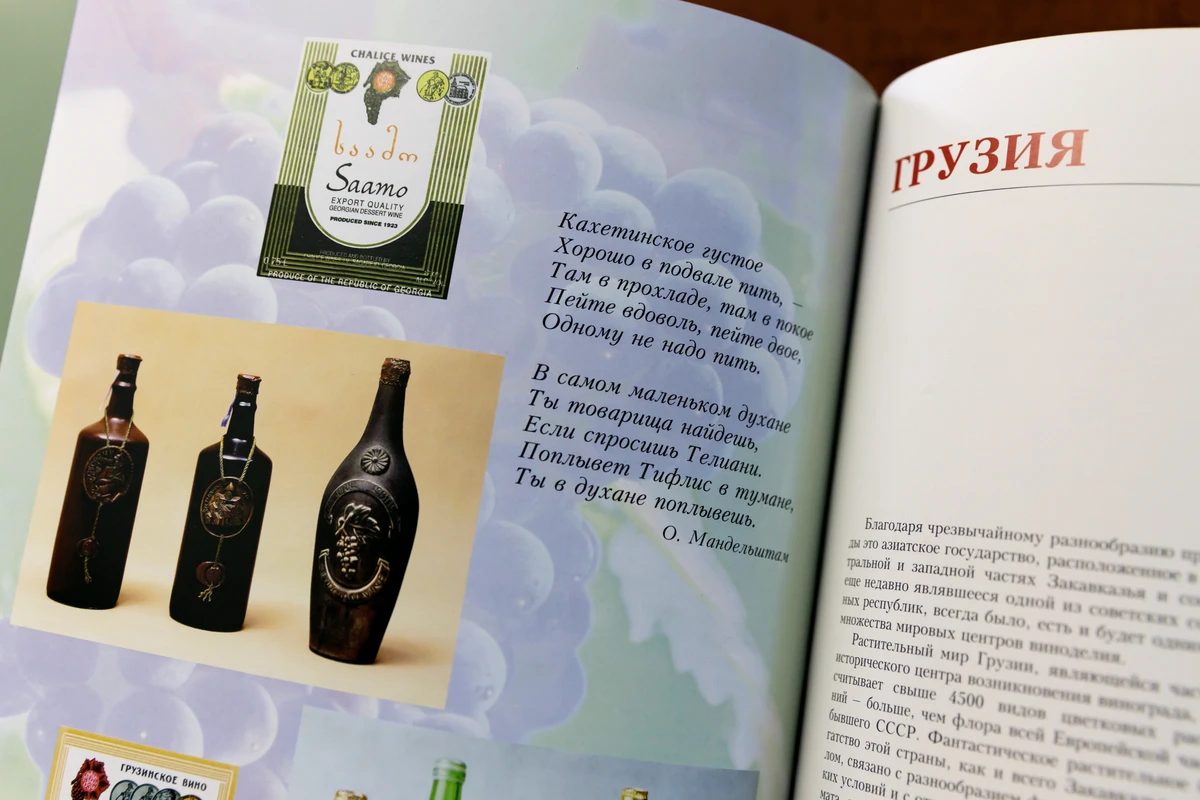
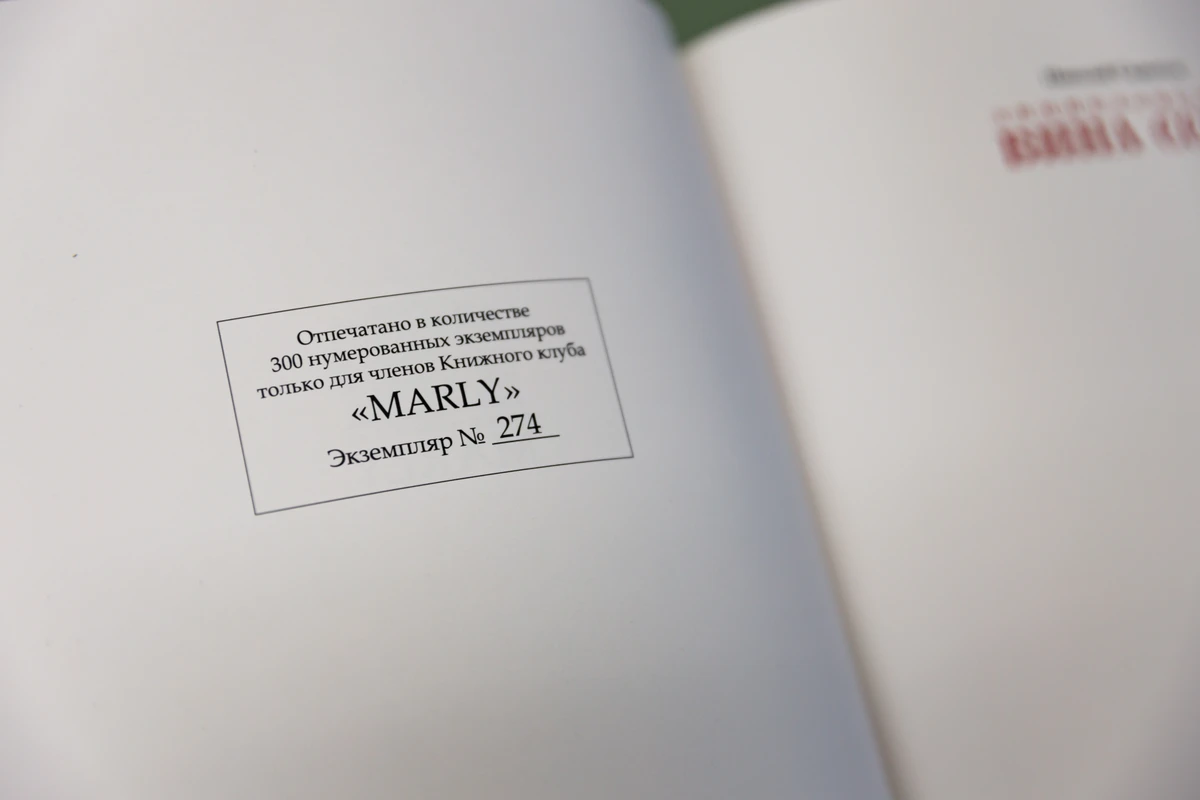
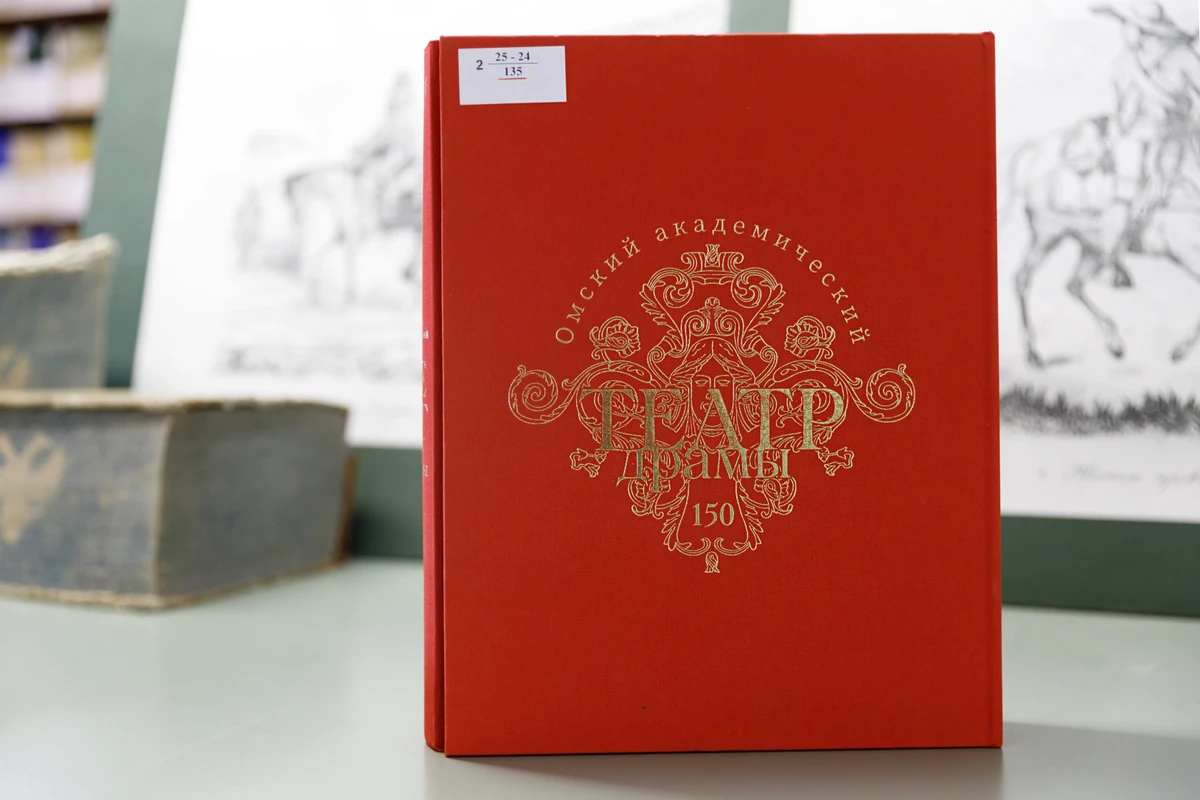
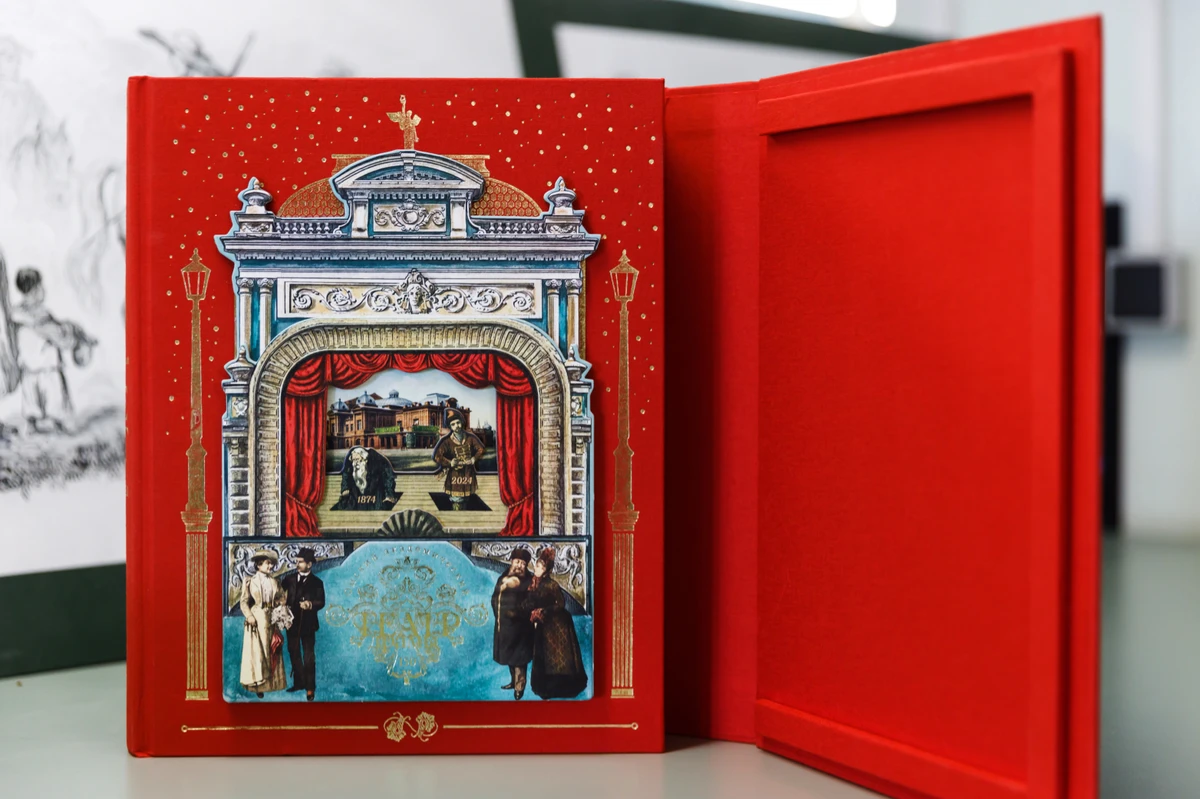
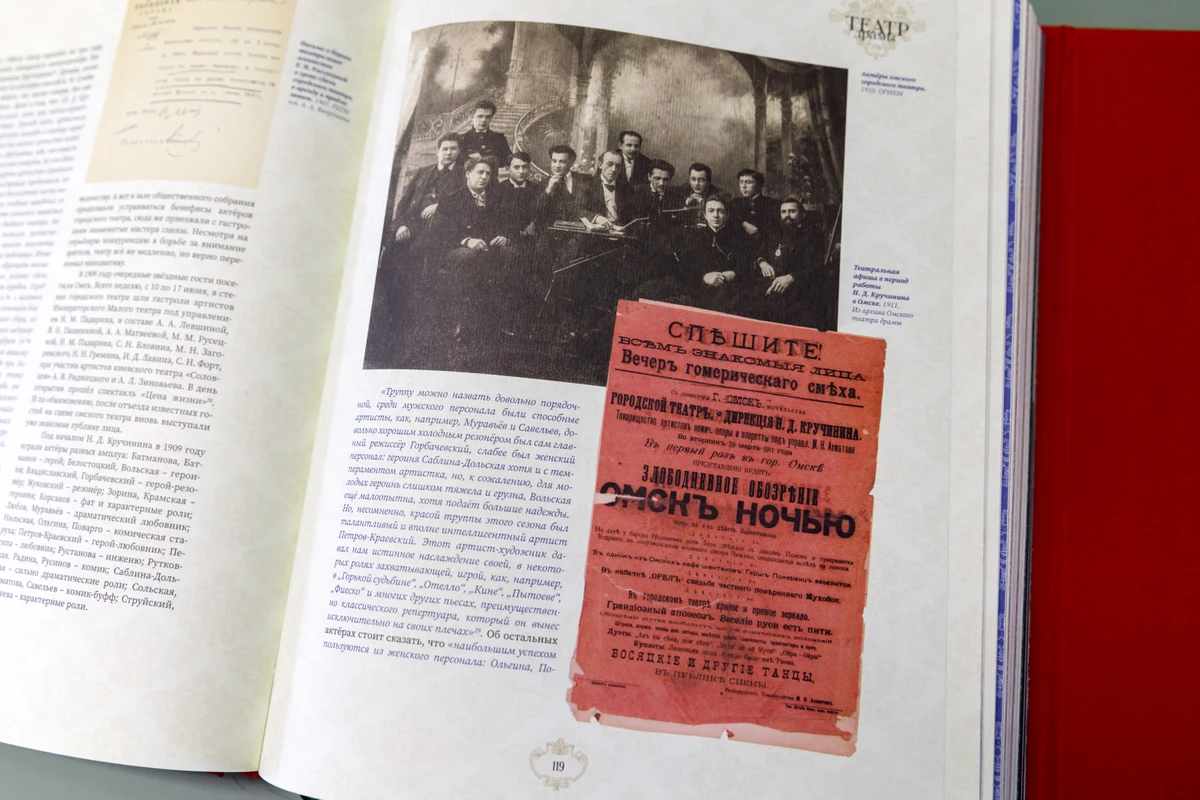
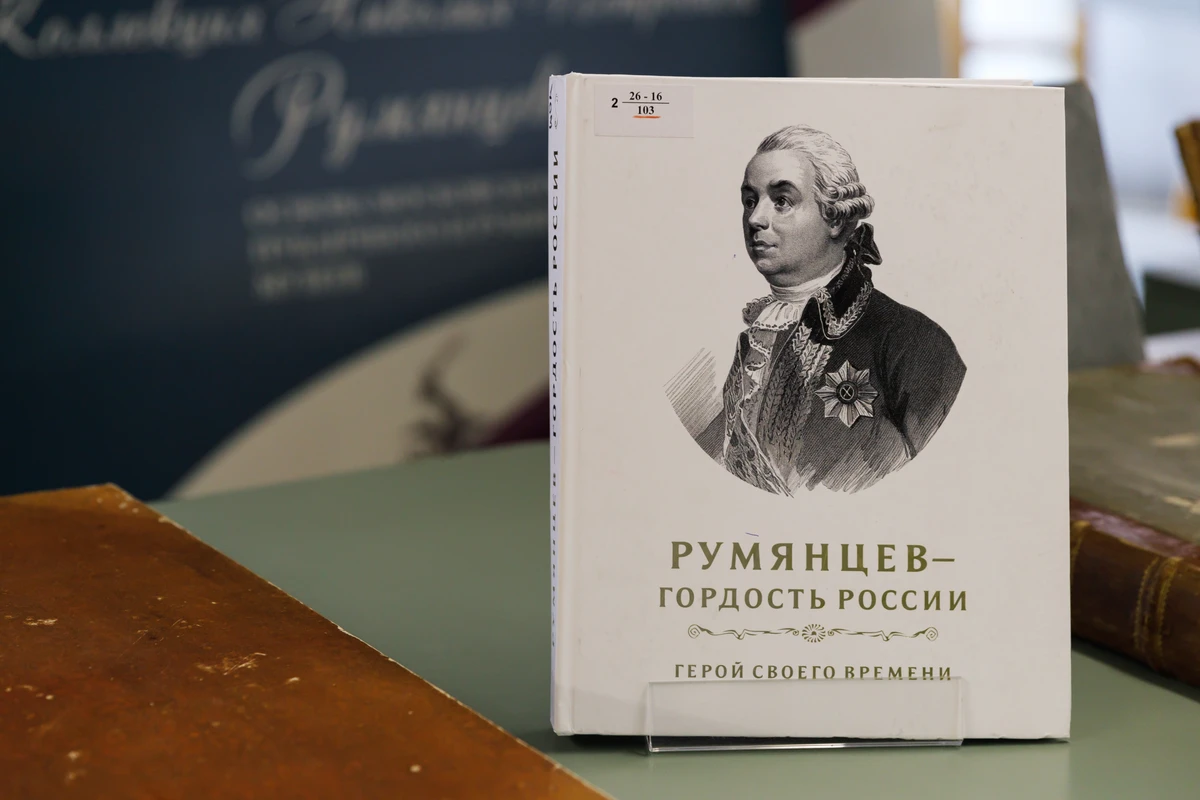
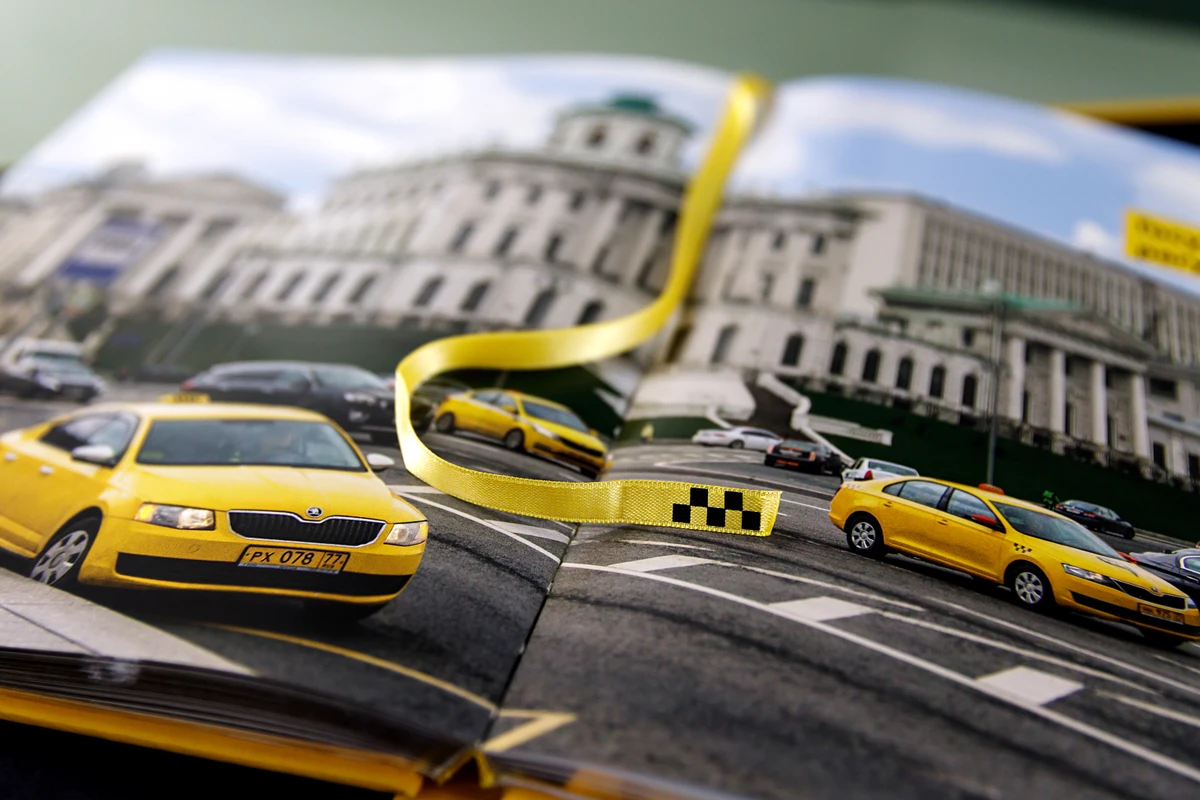
Those who visit the Main Collection book depository as part of a tour are usually drawn to the beautiful old leather-bound books with handwritten annotations and illustrations. However, modern publishers and printers are not far behind. Unique small print run editions are enriching the RSL collection and, perhaps, they may well become rarities in decades to come.
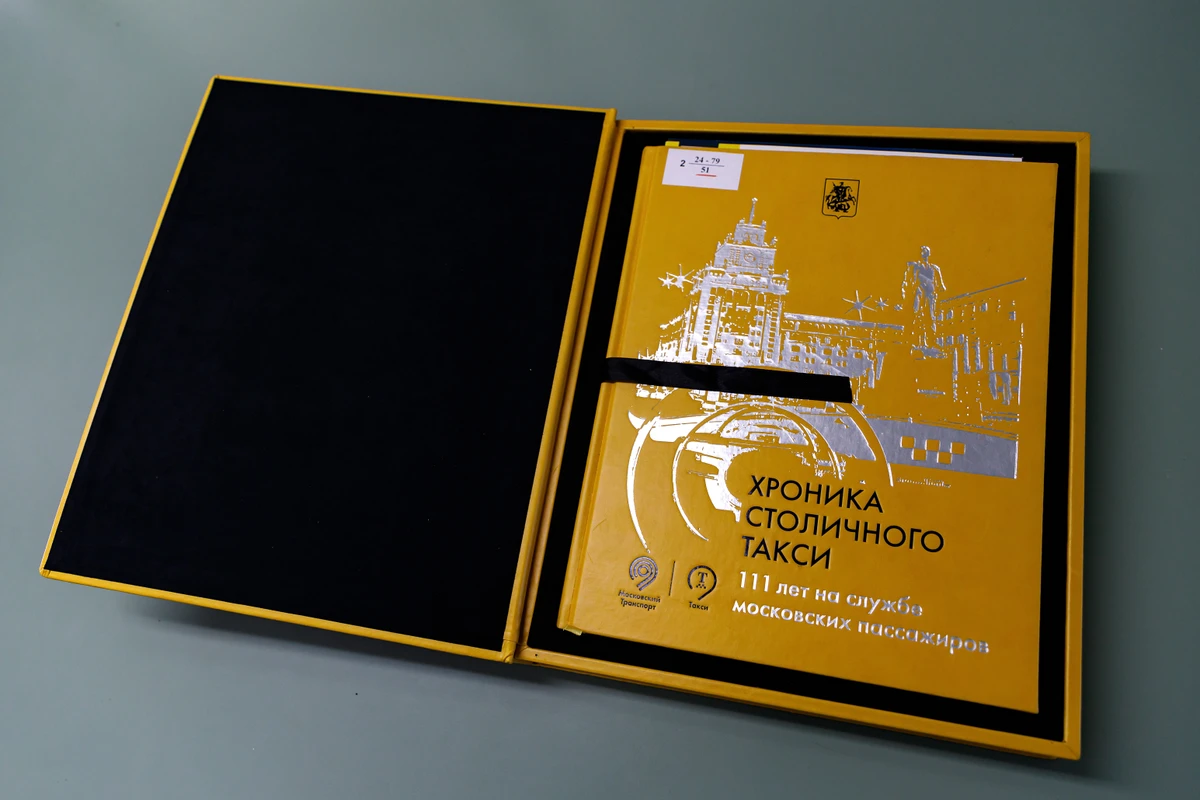
In the photographs—an encyclopaedia “Wines of the USSR”, bound in cork, which is an unusual material. Print run: only 300 numbered copies. The Omsk Academic Theatre's 150th anniversary edition has a cover designed to resemble a stage; inside— panoramic views, history, and backstage stories. Print run: 500 copies.
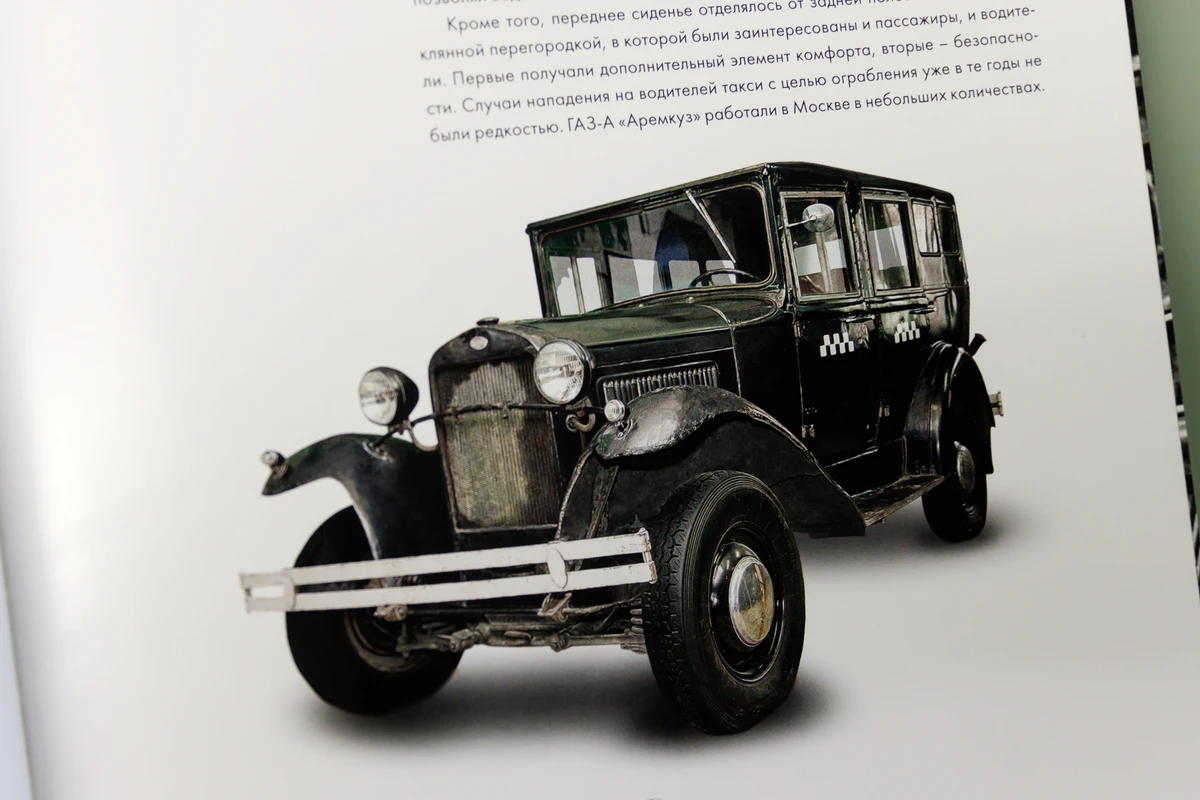
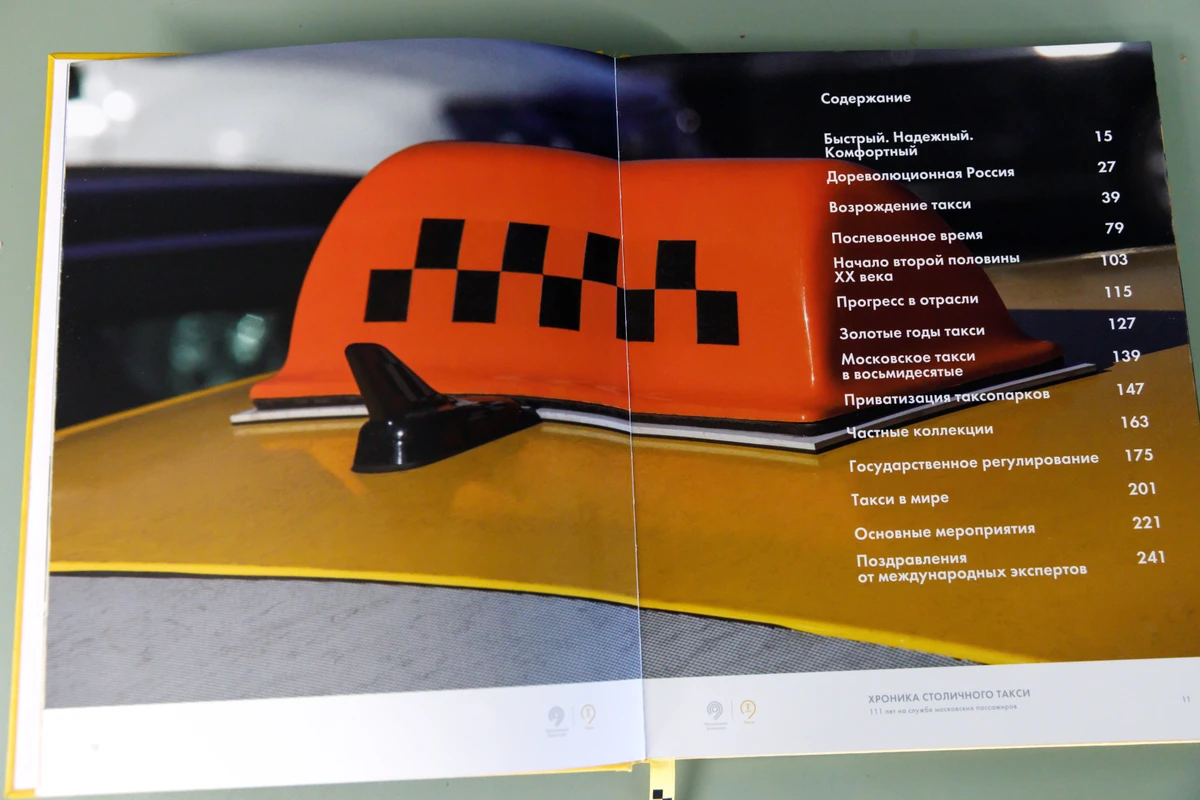
“The Chronicle of the Capital’s Taxis” is a treat for urban history enthusiasts—vivid illustrations, a bookmark ribbon designed to resemble a taxi's chequered pattern, and a full-spread photograph of a taxi with the Pashkov House in the background. Print run: 1,500 copies.
Another book, “Rumyantsev—Pride of Russia. A Hero of His Time”, was published in 2026 with a print run of 2,000 copies. It covers the life and achievements of the great commander Count Pyotr Rumyantsev-Zadunaisky, the father of Nikolai Rumyantsev, whose book collection became the foundation of our library.
“Modern publishers know how to impress”, admits Head Curator Natalya Kopylova.
So far, we have looked at the organisation of the Main Collection, traced a book’s journey from order to reader, and explored the work of the three sectors of the Department of Storage. Next time, we will turn to the book collections held at the RSL.
Material prepared by:
Natalia Kopylova, Head Curator of the RSL Department of Storage of Main Collections
Maria Govtvan, RSL Photo Editor
We are grateful for the assistance of Head of the Research and Methodology Sector Ilya Baushev, Head Librarian of the Research and Methodology Sector Yulia Vishnyakova, Head Librarian of the Research and Methodology Sector Olga Boldyreva, Head of the Collection Preservation Sector Larisa Komissarenko, Head Librarian of the Collection Preservation Sector Irina Mukhina, Head Librarian of the Collection Organisation Sector Evgenia Churilina, Head Librarian of the Collection Organisation Sector Ekaterina Grachova, Head Librarian of the Collection Organisation Sector Natalya Seryozhina, Head Librarian of the Collection Organisation Sector Nadezhda Danilova, 1st Category Librarian of the Collection Organisation Sector Irina Dolbilova, 2nd Category Librarian of the Collection Organisation Sector Elena Kuzina, and Head Librarian of the Collection Organisation Sector Valentina Yakovleva. Special thanks to RSL Deputy Director General for Storage and User Services Olga Serova for her valuable comments and support.
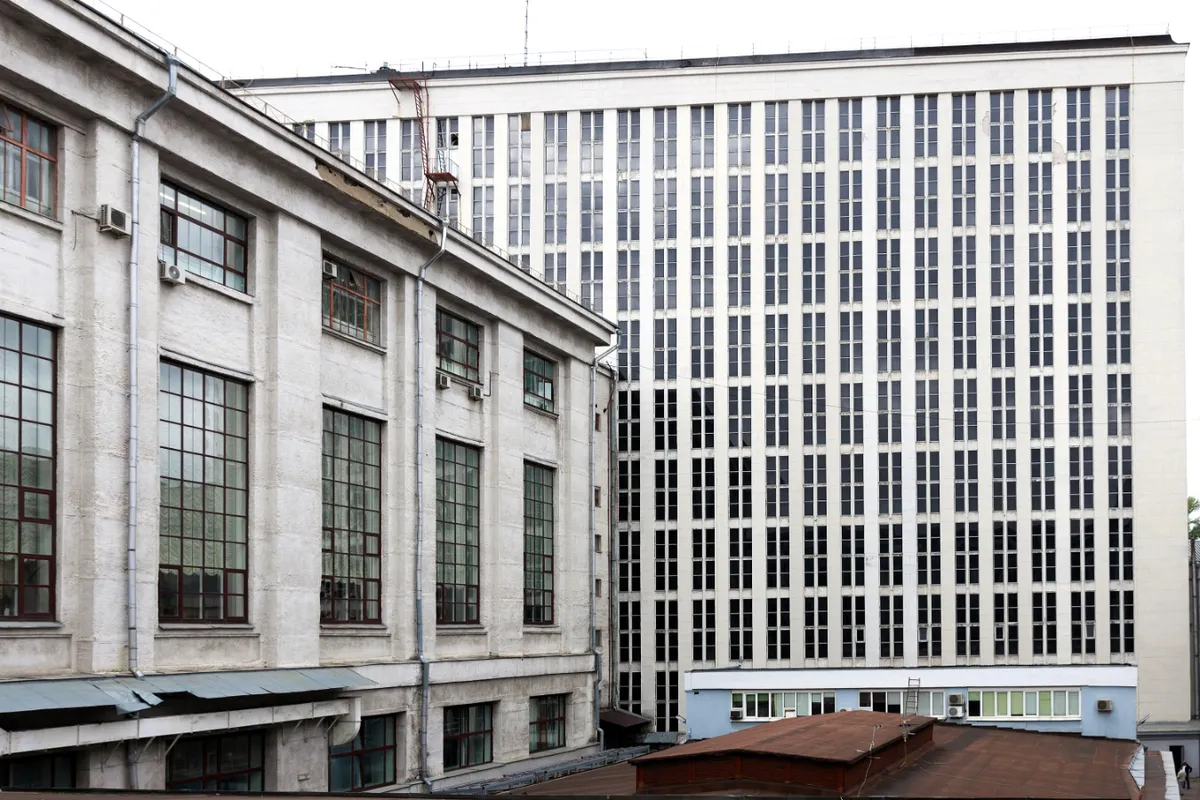
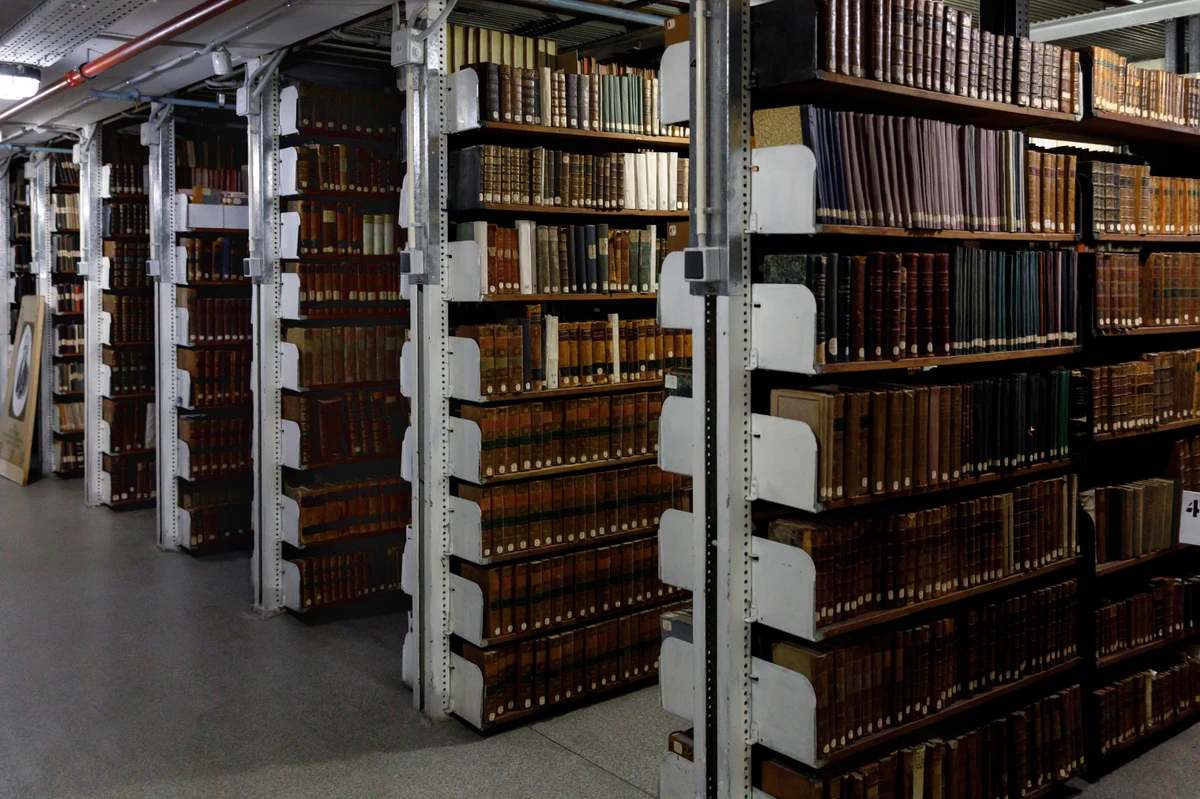
View of the RSL main book depository
Photo: Maria Govtvan, RSL